
 Deutsch
 Nederlands
 Polski
 Italiano
 Français
 Español
 Română

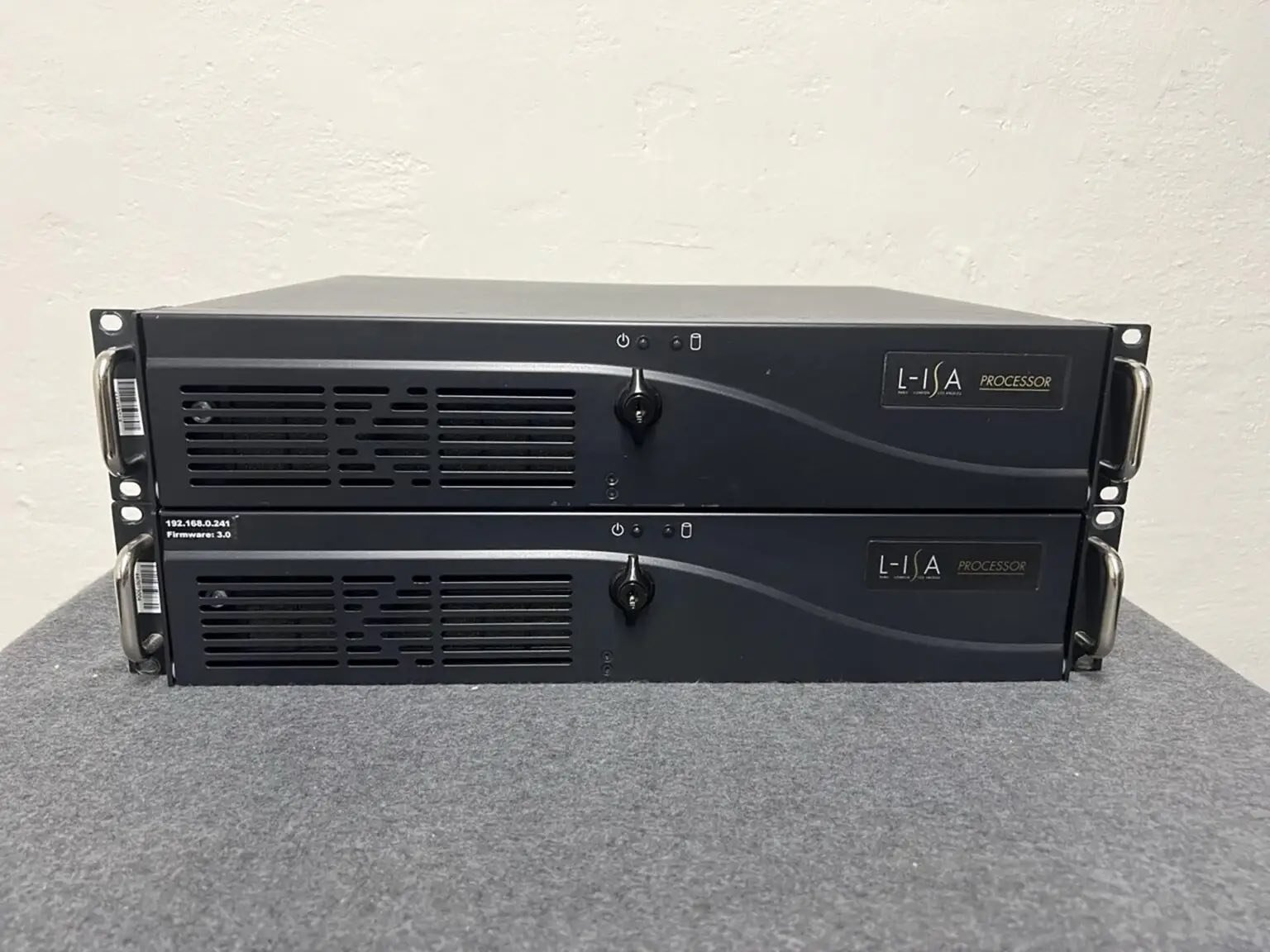
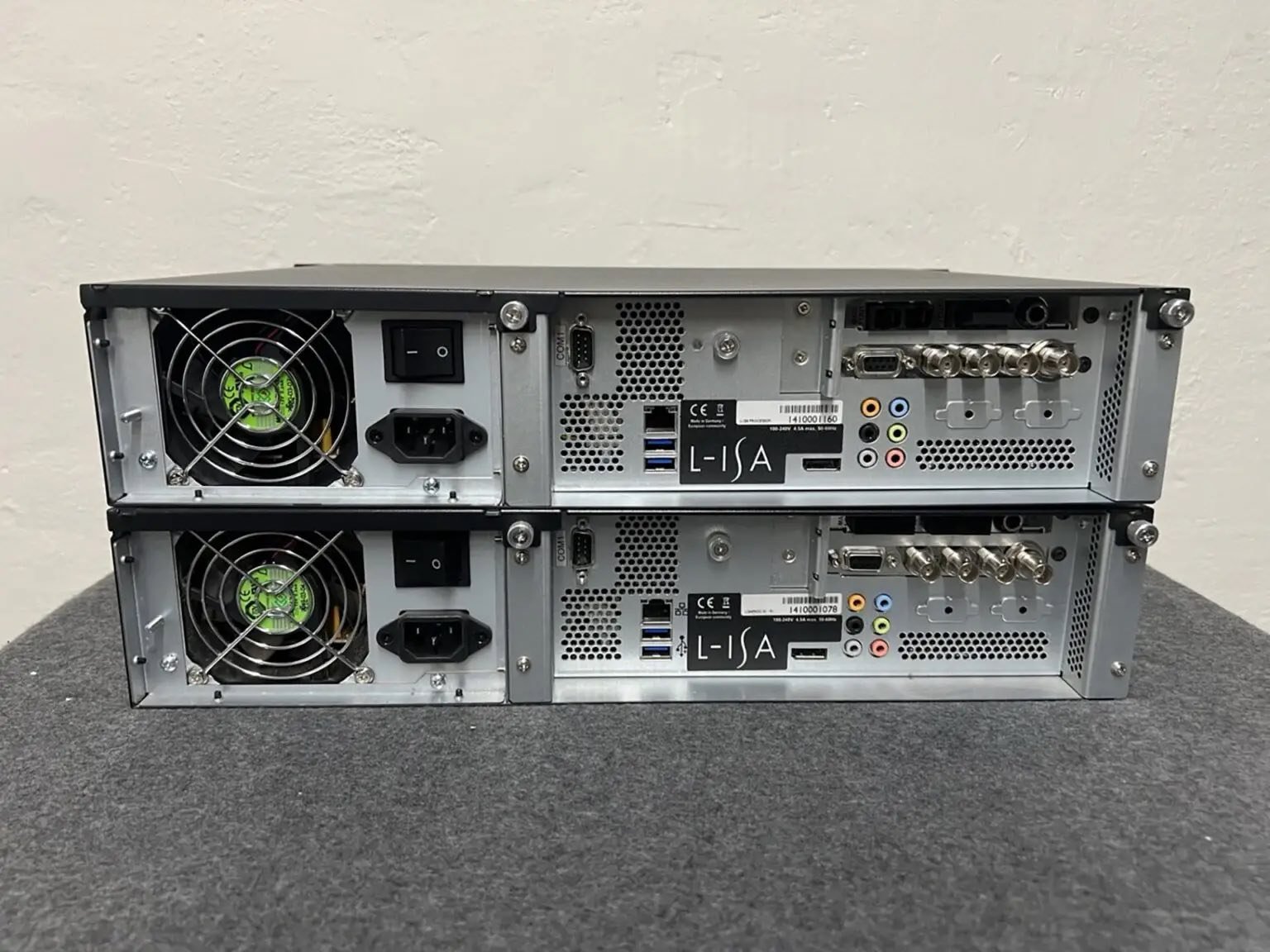
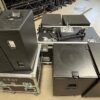
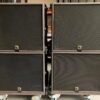
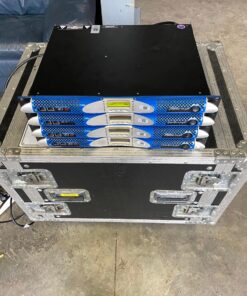
Buy L-Acoustics L-ISA Server Generation 1 – Immersive Audio Processor
The L-Acoustics L-ISA Server Generation 1 is a professional spatial audio processing system developed for object-based sound mixing, immersive live performances, theatrical productions, and multi-channel audio installations.
Also associated with the original L-ISA Processor platform, this first-generation server enables sound engineers to position and manage individual audio sources across compatible multi-loudspeaker systems rather than relying exclusively on conventional left-and-right stereo mixing.
For productions involving spatial sound design, the L-ISA Server acts as a central rendering engine, processing audio objects and distributing their signals to the appropriate loudspeaker outputs.
Its applications include immersive concert systems, performing arts venues, exhibitions, experiential events, and permanent installations requiring more flexible sound placement.
For professional buyers searching for an L-Acoustics L-ISA Server Generation 1 for sale in Europe, Electronic Space provides a point of enquiry for this specialised immersive audio processor.
What Does the L-ISA Server Actually Do?
The L-ISA Server performs a fundamentally different task from a conventional audio mixer or loudspeaker processor.
A traditional stereo sound system typically distributes audio between left and right loudspeaker channels.
The L-ISA platform allows compatible audio sources to be treated as individual sound objects.
Instead of assigning every source to a fixed stereo position, the engineer can define spatial characteristics that determine how the sound is rendered across the available loudspeakers.
Example: A Live Orchestra
Consider an orchestra with multiple instrument sections.
In a conventional stereo mix, the engineer may position instruments between left and right outputs.
In an appropriately designed L-ISA system, individual instruments or groups can be assigned spatial positions that correspond more closely to their locations on stage.
This can create a stronger relationship between the sound the audience hears and the performers they see.
Example: An Immersive Exhibition
An exhibition may contain sound effects, narration, music, and moving audio elements.
The L-ISA processing environment can be used to position compatible audio objects within a designed loudspeaker layout.
This allows the sound designer to create spatial transitions and movement rather than relying solely on fixed-channel playback.
The actual immersive effect depends on the loudspeaker arrangement, room acoustics, rendering configuration, and audience position.
L-ISA Generation 1 Technical Overview
| Specification | Details |
|---|---|
| Manufacturer | L-Acoustics |
| Product | L-ISA Server |
| Generation | Generation 1 |
| Equipment category | Immersive audio rendering processor |
| Processing approach | Object-based spatial audio |
| Primary function | Real-time spatial rendering and audio distribution |
| Input capacity | Up to 96 channels, configuration-dependent |
| Output capacity | Up to 64 channels, configuration-dependent |
| Digital audio connectivity | MADI-based workflows |
| Control environment | L-ISA Controller software |
| Spatial parameters | Position, width, distance, elevation |
| Installation format | Rackmount server |
| Typical applications | Touring, theatre, immersive installations |
| External equipment | Compatible consoles, audio interfaces and loudspeaker systems |
These figures are drawn from the supplied Generation 1 product information. Exact channel capacity, sample-rate support, physical interfaces, chassis dimensions, power requirements, and software compatibility must be verified for the specific server hardware and installed software version.
From Stereo Mixing to Object-Based Audio
Understanding the difference between channel-based and object-based audio is important before purchasing an L-ISA Server.
In conventional channel-based mixing, an audio signal is routed to one or more defined output channels.
With object-based audio, the signal is associated with spatial information.
The rendering engine then uses that information to determine how the sound should be distributed across the loudspeaker system.
Horizontal Positioning
Audio objects can be positioned across the available horizontal sound field.
This is useful for placing vocals, instruments, and sound effects in relation to a stage or visual presentation.
Width
A sound object can be represented as a narrow source or distributed more broadly, depending on the available rendering controls.
For example, a lead vocal may require a focused presentation while a synthesiser or atmospheric sound may benefit from greater spatial width.
Distance
Distance-related processing can contribute to the perception that a sound is closer to or farther from the listener.
The resulting effect depends on the processing configuration and loudspeaker system.
Elevation
Where the system and loudspeaker arrangement support vertical spatial rendering, elevation can contribute to the placement of sound above or below the primary horizontal plane.
This is particularly relevant to installations incorporating overhead loudspeakers.
The Role of the L-ISA Server in a Complete System
The L-ISA Server is not a standalone sound reinforcement system.
It is a processing component within a larger audio architecture.
A typical installation may include a digital mixing console, L-ISA processing hardware, compatible amplified controllers, and multiple loudspeaker arrays.
<text weight=”medium”>Simplified L-ISA signal flow</text>
<box border radius=”lg” padding={3} gap={2} align=”center”> <box background=”surface-secondary” radius=”md” padding={3} width=”100%” align=”center”> **Audio sources and digital mixing console**
<text color="secondary" size="xs" textAlign="center">Microphones, instruments, playback and DAW outputs</text></box> <icon name=”arrow-down” color=”tertiary” size=”lg”/> <box background=”rgba(42,117,198,0.09)” border={{size:1,color:”info”}} radius=”md” padding={3} width=”100%” align=”center”> **L-Acoustics L-ISA Server Gen 1**
<text color="secondary" size="xs" textAlign="center">Object positioning, spatial rendering and output distribution</text></box> <icon name=”arrow-down” color=”tertiary” size=”lg”/> <box background=”surface-secondary” radius=”md” padding={3} width=”100%” align=”center”> **Compatible amplified controllers**
<text color="secondary" size="xs" textAlign="center">Amplification, loudspeaker processing and protection</text></box> <icon name=”arrow-down” color=”tertiary” size=”lg”/> <box background=”surface-secondary” radius=”md” padding={3} width=”100%” align=”center”> **Multi-loudspeaker immersive system**
<text color="secondary" size="xs" textAlign="center">Frontal arrays, lateral loudspeakers, surrounds and optional overhead channels</text></box> </box>
The precise signal flow depends on the selected interfaces, processor configuration, and system architecture.
The L-ISA Server does not replace the need for suitable loudspeaker amplification, electrical infrastructure, or professional system tuning.
MADI Connectivity and Multi-Channel Audio Routing
Professional immersive sound systems often require significantly more audio channels than conventional stereo installations.
The Generation 1 L-ISA platform uses MADI-based audio connectivity to support multichannel signal transport.
MADI is a digital audio interface commonly used in professional touring, recording, and broadcast environments.
Multiple Audio Inputs
The supplied information describes configurations supporting up to 96 input channels.
This enables numerous audio sources to be presented to the spatial rendering engine, subject to the actual system configuration.
Multiple Rendered Outputs
The supplied information identifies configurations supporting up to 64 outputs.
These outputs can be used to distribute rendered audio to compatible downstream equipment.
Integration with Digital Consoles
A suitable digital mixing console can supply audio sources to the L-ISA processing system.
However, the required interface hardware and routing configuration depend on the console and server.
Recording and Playback Workflows
MADI connectivity can also be relevant to recording, rehearsal, and playback systems.
The required hardware must be checked before planning an installation.
L-ISA Controller Software – Managing the Spatial Mix
The L-ISA Server is operated within the L-ISA control environment.
L-ISA Controller software provides the interface through which engineers and sound designers can manage supported spatial parameters.
Rather than treating immersive audio as a collection of manually adjusted loudspeaker feeds, the control environment allows operators to work with sound objects.
Object Positioning
Engineers can define where an audio source should appear within the configured spatial field.
Object Width
The apparent spread of supported audio objects can be adjusted.
Spatial Movement
Object positions can be changed during a performance or installation sequence.
Scene and Show Control
Supported control and automation workflows can help manage spatial changes during repeatable productions.
System Configuration
The software environment is also important for organising the relationship between audio objects and the loudspeaker system.
Software version and licensing are critical purchasing considerations for Generation 1 hardware. Buyers should confirm which L-ISA software versions are compatible with the specific processor before purchasing.
Room Engine and Spatial Effects
The supplied product information identifies Room Engine functionality as part of the L-ISA immersive audio environment.
Room-related spatial processing can contribute to the perception of acoustic space, reverberation, and depth.
This can be particularly useful in productions where the desired listening environment differs from the physical characteristics of the venue.
Theatrical Productions
Spatial ambience can help support changes between dramatic environments.
Immersive Exhibitions
Sound designers can use spatial processing to create a stronger sense of place.
Concert Productions
Spatial effects can contribute to a wider and more enveloping musical presentation.
Experiential Events
Audio can be incorporated into multimedia environments where spatial movement is part of the creative concept.
The availability and behaviour of specific Room Engine features should be confirmed for the installed Generation 1 software and licensing configuration.
Where L-ISA Generation 1 Can Make a Difference
The L-ISA Server is most useful when a production has a clear requirement for spatial audio rather than conventional stereo reinforcement.
Where L-ISA Generation 1 Can Make a Difference
Concerts and Live Music
Immersive audio allows engineers to distribute musical sources across a broader spatial field. Instruments can be positioned to correspond with their physical arrangement on stage, helping listeners distinguish individual sound sources.
Theatres and Performing Arts
Theatre sound design requires precise relationships between sound, movement, and visual action. Object-based audio supports spatial effects, moving sound sources, and scene-dependent sound placement.
Museums and Exhibitions
Immersive installations use multiple loudspeakers to create environmental audio, narration, and interactive sound experiences. The L-ISA Server supports suitable multi-channel installations.
Corporate and Experiential Events
Product launches, multimedia presentations, and brand experiences can use spatial audio to coordinate sound movement with visual content.
Permanent Entertainment Venues
Venues with dedicated immersive loudspeaker systems can use L-ISA processing for concerts, theatrical performances, and spatial audio installations.
Venues with dedicated immersive loudspeaker systems may use L-ISA processing to support a range of performances and installations.
Frontal, Surround and Overhead Loudspeaker Configurations
An immersive audio processor requires a suitable loudspeaker layout to reproduce the intended spatial effect.
The number and positioning of loudspeakers depend on the application.
Frontal Arrays
Multiple frontal loudspeaker arrays can support spatial sound placement across the performance area.
This may provide more precise localisation than a conventional two-array stereo system in suitable configurations.
Lateral Loudspeakers
Side loudspeakers can extend the available spatial field beyond the main frontal system.
Surround Loudspeakers
Surround channels can support sound placement around the listening area.
Overhead Loudspeakers
Where supported by the rendering configuration, overhead loudspeakers can contribute a vertical dimension to the sound field.
System Design Considerations
Loudspeaker quantity alone does not guarantee successful immersion.
Coverage, timing, frequency response, room acoustics, and audience geometry all affect the result.
A properly engineered L-ISA installation requires professional acoustic design and system commissioning.
Buying a Generation 1 L-ISA Server – Important Compatibility Questions
The Generation 1 designation is particularly important.
This server belongs to an earlier hardware generation, so buyers should evaluate its capabilities against the requirements of their intended production.
Confirm the Exact Hardware Version
Request the model identification, serial number, and hardware details.
Check Software Compatibility
Verify which versions of L-ISA Controller and associated software are supported.
Confirm Licensing
Determine whether the required software licences or entitlements are available and transferable, where applicable.
Identify the Audio Interfaces
Confirm the installed MADI interfaces, connector types, and supported channel configurations.
Verify Input and Output Capacity
Do not assume that every Generation 1 processor provides the maximum channel capacity referenced in general product descriptions.
Test Network Connectivity
Confirm that the processor communicates correctly with the required control equipment.
Check System Operation
Request a functional demonstration where possible, including audio routing and spatial rendering.
Inspect the Rackmount Chassis
Check the enclosure, ventilation system, connectors, and signs of physical damage.
Verify Power Requirements
Confirm the actual AC input specifications from the unit’s identification label or manufacturer documentation.
Confirm Support Availability
For legacy processing hardware, software availability, service options, and replacement components are important considerations.
Check Included Accessories
Determine whether rack hardware, power cables, interface cabling, control computers, or other accessories are included.
The supplied information does not confirm the server’s current condition, installed software, licensing status, or complete package contents.
L-ISA Generation 1 vs Newer Immersive Processing Systems
The original L-ISA platform represents an earlier generation of L-Acoustics immersive audio technology.
Newer processing systems may provide expanded capabilities, different hardware architectures, or updated software support.
| Buying consideration | L-ISA Server Generation 1 |
|---|---|
| Processing purpose | Object-based spatial audio rendering |
| Product generation | First-generation hardware |
| Audio connectivity | MADI-based workflows |
| Channel capacity | Configuration-dependent |
| Control | Compatible L-ISA software |
| Existing system integration | Requires compatibility verification |
| Software support | Must be confirmed |
| Licensing | Must be confirmed |
| Best purchasing approach | Evaluate the complete system configuration |
When Generation 1 May Be Appropriate
A first-generation server may be relevant to organisations maintaining compatible L-ISA infrastructure or projects with requirements that match its verified processing capacity.
When a Newer Processor May Be Better
For a completely new immersive audio installation, buyers should compare current L-Acoustics processing solutions before committing to older hardware.
Future software support, integration requirements, and system expansion are important factors.
Who Should Consider the L-Acoustics L-ISA Server Gen 1?
Immersive sound designers working with compatible object-based audio systems may find the processor relevant to their workflows.
Touring production companies maintaining L-ISA infrastructure may require compatible processing equipment.
Theatres and performing arts venues can evaluate the system for suitable spatial audio productions.
Museums and exhibition designers may consider it for multi-channel sound installations.
AV integrators working with existing L-ISA systems may need replacement or supplementary hardware.
Professional audio rental companies can evaluate the server where its processing capabilities and compatibility match customer requirements.
Frequently Asked Questions About L-Acoustics L-ISA Server Generation 1
What is the L-Acoustics L-ISA Server?
The L-ISA Server is a professional immersive audio processor designed to render object-based audio across compatible multi-loudspeaker systems.
What does Generation 1 mean?
Generation 1 identifies the original hardware generation of the L-ISA processing platform.
Is the L-ISA Server a digital mixing console?
No. It is a spatial audio rendering processor intended to work within a larger professional audio system.
Does L-ISA support object-based audio?
Yes. Object-based spatial audio is a central feature of the L-ISA platform.
How many inputs and outputs does Generation 1 support?
The supplied information identifies configurations supporting up to 96 inputs and 64 outputs. The exact capacity must be confirmed for the individual processor.
Does the L-ISA Server support MADI?
Yes. The supplied Generation 1 information describes MADI-based audio input and output workflows.
Can L-ISA work with a digital mixing console?
Yes. Compatible consoles can supply audio to the L-ISA processing system through suitable digital audio interfaces.
Does the server include amplification?
No. The L-ISA Server performs audio processing and rendering. Compatible amplification and loudspeaker systems are required separately.
Can L-ISA create surround sound?
It can support spatial audio rendering across suitable multi-loudspeaker configurations, including systems incorporating surround channels.
Does L-ISA support height-based audio?
Height-related spatial rendering depends on the supported software capabilities and loudspeaker configuration.
Can the server be used for live concerts?
Yes. The L-ISA platform was developed for professional immersive audio applications, including live performances.
Is L-ISA suitable for theatre productions?
Yes. Object-based spatial audio can support theatrical sound placement and effects.
Can the server be used for permanent installations?
Yes, provided the hardware, software, and system configuration meet the installation requirements.
Is Generation 1 compatible with the latest L-ISA software?
Compatibility should be checked directly against the applicable L-Acoustics documentation. It should not be assumed that older hardware supports every newer software release.
Is L-ISA Controller software included?
The supplied listing does not confirm the software version, licence arrangements, or included control equipment.
Where can I buy L-Acoustics L-ISA Server Generation 1 in Europe?
Electronic Space provides a point of enquiry for the L-Acoustics L-ISA Server Generation 1 and other professional audio processing equipment.
Buy L-Acoustics L-ISA Server Generation 1 from Electronic Space
The L-Acoustics L-ISA Server Generation 1 is a specialised professional audio processor designed for object-based spatial rendering and immersive sound reinforcement.
Its ability to manage multiple audio sources and distribute rendered sound across compatible loudspeaker systems makes it relevant to immersive concerts, theatre productions, exhibitions, and dedicated spatial audio installations.
For buyers maintaining an existing L-ISA environment, the first-generation processor may provide a practical hardware option when the required software, audio interfaces, and system capabilities are compatible.
Because this is legacy immersive processing equipment, the most important purchasing considerations are the exact hardware version, verified channel capacity, software compatibility, licensing status, and current operating condition.
Contact Electronic Space for L-Acoustics L-ISA Server Generation 1 pricing, current availability, hardware details, software information, included accessories, and European or international delivery arrangements.
Be the first to review “L-Acoustics L-isa server generation 1”
Related products
D&B Audiotechnik
Power Amps
Power Amps
Power Amps
Power Amps
Power Amps
Power Amps
Power Amps
Reviews
There are no reviews yet.