
 Deutsch
 Nederlands
 Polski
 Italiano
 Français
 Español
 Română

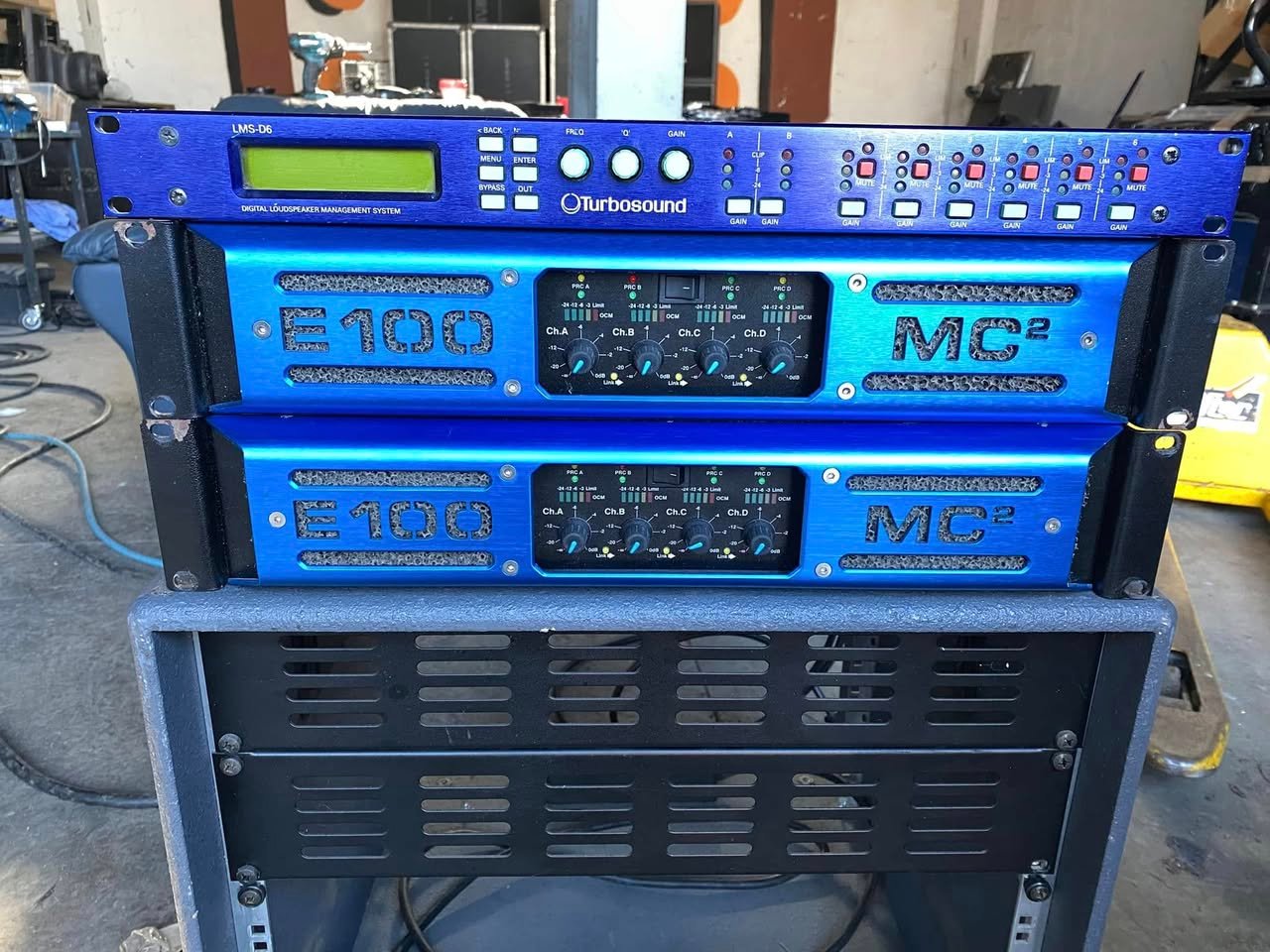
Turbosound LMS-D6 – 2-In / 6-Out Digital Loudspeaker Management Processor
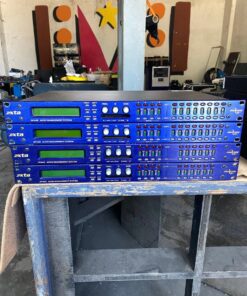
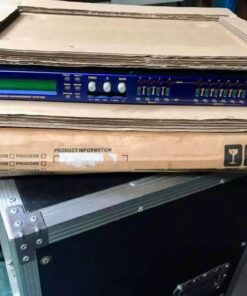
The Turbosound LMS-D6 is a professional digital loudspeaker management processor developed for configuring, aligning and protecting compatible Turbosound sound systems. Based on a customised version of the XTA DP226 processing platform, it combines two balanced inputs, six independently controlled outputs and dedicated DSP functions in a compact 1U rackmount unit.
For owners of established Turbosound touring systems, the LMS-D6 provides a central point for managing crossover frequencies, loudspeaker alignment, equalisation and output limiting.
Its value is particularly apparent in multi-way sound systems where different loudspeaker components require precise, independent signal processing.
One Processor, Multiple Loudspeaker Configurations
The LMS-D6 offers several crossover configurations, allowing engineers to adapt its six outputs to different loudspeaker arrangements.
Rather than using separate crossover units for each frequency band, the processor can distribute signals across multiple outputs with dedicated filtering and control.
The supplied configuration options include:
| Crossover configuration | Typical system arrangement |
|---|---|
| 3 × 2-way | Three independently processed two-way sections |
| 2 × 3-way | Stereo three-way loudspeaker system |
| 4-way | Four independently processed frequency bands |
| 5-way | Five-way loudspeaker configuration |
| 6-way | Six independently processed output sections |
The two input channels can be routed to different outputs or combined where required by the system configuration.
This flexibility is useful for professional audio engineers working with Turbosound systems that combine separate high-frequency, midrange, low-frequency and subwoofer components.
Example: Stereo Three-Way System
A common application for a six-output processor is a stereo three-way loudspeaker arrangement.
In this configuration, the LMS-D6 can provide:
- Output 1: Left high-frequency section
- Output 2: Left mid-frequency section
- Output 3: Left low-frequency section
- Output 4: Right high-frequency section
- Output 5: Right mid-frequency section
- Output 6: Right low-frequency section
Each output can be processed independently according to the loudspeaker requirements.
This example illustrates the processor’s routing capability. Actual connections and processing settings must follow the relevant Turbosound system configuration.
Crossover Accuracy and Driver Alignment
In a multi-way loudspeaker system, individual drivers reproduce different parts of the audio spectrum.
High-frequency drivers, midrange sections and bass loudspeakers must operate together without unwanted overlap or gaps in frequency response.
The Turbosound LMS-D6 provides the filtering and timing controls needed to manage these relationships.
Crossover filtering
The processor supports configurable crossover filters with slopes of up to 24 dB per octave, according to the supplied specifications.
Available filter types include Butterworth, Bessel and Linkwitz-Riley.
These options allow engineers to select filtering characteristics appropriate to the loudspeaker system.
Time alignment
Independent output delays help compensate for differences in the physical positioning of loudspeaker drivers and cabinets.
The supplied specifications indicate delay adjustment up to approximately 650 milliseconds, with fine resolution for precise alignment.
Equalisation
Parametric filtering allows engineers to adjust the frequency response of individual outputs.
This is particularly useful when tuning multi-way systems or integrating subwoofers with main loudspeakers.
Polarity control
Independent polarity settings support correct interaction between loudspeaker sections.
Together, these functions allow the LMS-D6 to manage the electrical signals feeding different parts of a professional sound system.
Why the XTA DP226 Platform Matters
The LMS-D6 is described as a Turbosound-specific variant of the XTA DP226, a digital loudspeaker management platform developed for professional audio applications.
This association is particularly relevant to buyers who already operate older Turbosound touring equipment.
The LMS-D6 provides a familiar processing approach for engineers working with systems that depend on dedicated crossover and limiter configurations.
Its supplied DSP specifications include 24-bit processing and a 96 kHz sampling architecture.
The processor is designed to handle the essential tasks of loudspeaker management without requiring separate devices for crossover filtering, delay and output equalisation.
However, the LMS-D6 should not automatically be treated as identical to every standard DP226 version.
Firmware, preset availability and certain operating functions may differ between the Turbosound-specific processor and other XTA configurations.
Loudspeaker Protection Through Output Limiting
Correct crossover settings are only one part of protecting a professional loudspeaker system.
Amplifier output, excessive signal levels and unsuitable processing can also damage loudspeaker components.
The Turbosound LMS-D6 includes output limiting functions designed to help manage these risks.
Each output can be configured with limiter parameters, including threshold and recovery settings, according to the supplied specifications.
For a multi-way loudspeaker system, this allows different loudspeaker sections to receive protection appropriate to their operating requirements.
For example, a high-frequency driver may require different limiting settings from a large bass loudspeaker.
The LMS-D6 provides the processing flexibility needed to apply separate settings.
Important: Limiter values must be matched to the actual loudspeaker components and amplifier configuration. Incorrect settings can reduce protection or damage equipment.
Turbosound Presets and System Compatibility
One of the reasons buyers seek the LMS-D6 is its association with established Turbosound loudspeaker systems.
The processor is described as supporting configurations for Turbosound Aspect, Flexarray and Touring Series equipment.
For rental companies and system owners, having the correct processing configuration is essential when operating these loudspeakers.
Preset Management
The supplied information identifies support for factory presets and user-defined configurations.
These can simplify system setup by storing the required processing parameters for particular loudspeaker arrangements.
Preset functions may include:
- Input and output routing
- Crossover frequencies and filter types
- Equalisation settings
- Driver alignment delays
- Output gain and polarity
- Limiter configuration
The availability of a specific Turbosound preset should be verified before purchase.
Not every LMS-D6 unit will necessarily contain the same firmware or stored configurations, particularly if it has previously been used in a customised installation.
A processor should only be used with a loudspeaker system after its settings have been confirmed as appropriate.
Front-Panel Operation and Rack Integration
The LMS-D6 is designed for use in professional amplifier and processing racks.
Its 1U enclosure occupies relatively little rack space while providing six separately processed audio outputs.
A backlit LCD display allows engineers to view operating information and navigate processor settings.
Rotary and push-button controls provide access to configuration functions, including parameter adjustment and preset recall.
The processor also includes security functions intended to help prevent unauthorised changes to stored configurations.
These features are useful in permanent installations where the sound system must operate consistently without frequent adjustment.
Physical Specifications
| Parameter | Specification |
|---|---|
| Manufacturer | Turbosound |
| Model | LMS-D6 |
| Processing platform | Custom XTA DP226 variant |
| Audio inputs | 2 balanced |
| Audio outputs | 6 balanced |
| DSP architecture | 24-bit / 96 kHz, as supplied |
| Crossover slopes | Up to 24 dB/octave |
| Filter types | Butterworth, Bessel, Linkwitz-Riley |
| Maximum output delay | Approximately 650 ms |
| Output limiting | Independently configurable |
| User interface | Backlit LCD, rotary control and buttons |
| Preset functions | Factory and user-defined configurations |
| Rack height | 1U |
| Rack width | Standard 19-inch |
| Depth | Approximately 300 mm |
| Weight | Approximately 3.5 kg |
| Power input | 90–250 VAC, as supplied |
| Power consumption | Below 30 W, as supplied |
Specifications and supported features should be checked against the documentation and firmware of the individual processor.
A Practical Choice for Existing Turbosound Systems
The LMS-D6 is particularly relevant to professional audio companies that already own compatible Turbosound loudspeakers.
For these buyers, the main purchasing consideration is often whether the processor can provide the correct settings for an existing system.
A replacement LMS-D6 may be useful when restoring an older touring rack, replacing a faulty loudspeaker controller or expanding an established equipment inventory.
It can also serve as the processing centre for a compatible multi-way installation.
Typical environments include concert touring, festivals, clubs, theatres and permanent entertainment venues.
Although the processor provides flexible routing and DSP functions, compatibility should always be assessed using the exact loudspeaker models, amplifier specifications and required presets.
What to Verify Before Purchasing an LMS-D6
Because the Turbosound LMS-D6 is associated with specific loudspeaker configurations, purchasing the correct unit involves more than checking its physical condition.
Buyers should confirm that:
- Both balanced audio inputs and all six outputs operate correctly.
- The LCD display and front-panel controls function properly.
- The required Turbosound presets are available or can be configured.
- The installed firmware supports the intended system.
- Preset security settings do not prevent necessary configuration changes.
- The processor’s power supply and connectors are in suitable condition.
If the LMS-D6 is being purchased as a replacement for an existing controller, comparing the firmware and processing configuration with the original unit is particularly important.
The supplied listing does not specify the individual processor’s condition, firmware version, installed presets, price or included accessories.
Buy Turbosound LMS-D6 DSP Processor in Europe
The Turbosound LMS-D6 2-in / 6-out DSP loudspeaker processor remains a useful component for professional sound systems requiring independent crossover control, delay alignment, equalisation and loudspeaker protection.
Its Turbosound-specific processing platform makes it particularly relevant to owners of compatible Aspect, Flexarray and Touring Series systems who need to maintain or expand an existing setup.
Electronic Space supplies professional audio equipment to buyers across Europe, including Germany, France, Austria, Belgium, the Netherlands, Italy and Spain.
Contact Electronic Space to enquire about the Turbosound LMS-D6, confirm pricing and availability, and verify the processor’s configuration before ordering.
Be the first to review “Turbosound D6 (XTA) 2 IN 6 OUT Processor”
Related products
Power Amps
Mc2 Audio Amplifiers
Power Amps
Power Amps
Power Amps
D&B Audiotechnik
Power Amps
Reviews
There are no reviews yet.