
 Deutsch
 Nederlands
 Polski
 Italiano
 Français
 Español
 Română

XTA Processors for Sale in Europe
Explore XTA processors for sale in Europe at EURL Electronic Space. Find professional digital loudspeaker management processors for touring PA systems, passive loudspeakers, subwoofer arrays, amplifier racks and permanent sound installations.
XTA Electronics is a British professional audio manufacturer known for digital signal processing equipment used in live sound reinforcement. Its DP Series processors provide control over crossover frequencies, equalisation, signal routing, delay and loudspeaker protection.
Our selection of used XTA processors includes models such as the DP226, DP446, DP448 and DP548, offering different input and output configurations for professional sound systems.
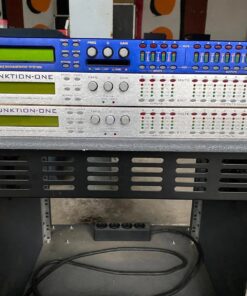
Funktion One
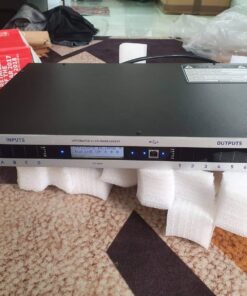
Power Amps
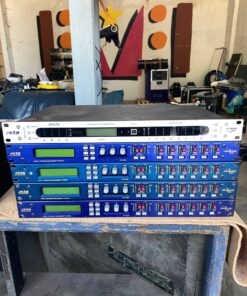
Used Sound Equipment
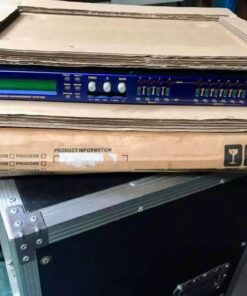
Power Amps
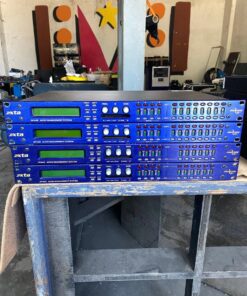
Power Amps
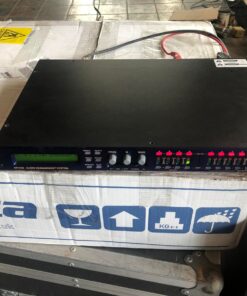
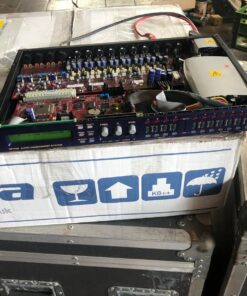
Power Amps
Power Amps
Choose an XTA Processor by Input and Output Count
The most important specification when selecting an XTA DSP processor is the number of independent audio inputs and outputs required by your loudspeaker system.
Every separately processed loudspeaker band, subwoofer group or delay zone may require its own output channel.
A processor with insufficient outputs can restrict system configuration, while choosing a suitable number of channels allows more flexible routing and future expansion.
| XTA model | Configuration | Typical application |
|---|---|---|
| XTA DP226 | 2 inputs / 6 outputs | Compact multi-way PA systems |
| XTA DP446 | 4 inputs / 6 outputs | Systems requiring additional input routing |
| XTA DP448 | 4 inputs / 8 outputs | Touring racks and larger multi-way systems |
| XTA DP548 | 4 inputs / 8 outputs | Advanced loudspeaker management applications |
Check the exact model specifications, available input formats and software compatibility before ordering.
XTA DP448: Four Inputs, Eight Outputs
The XTA DP448 processor is a professional digital loudspeaker management unit featuring four inputs and eight independently configurable outputs.
It is particularly useful for sound systems that require multiple crossover bands, separate subwoofer processing or dedicated output feeds for different loudspeaker sections.
Typical applications include:
- Multi-way passive PA systems
- Touring amplifier racks
- Subwoofer and main speaker alignment
- Front-of-house and delay loudspeaker control
- Club sound installations
- Professional monitor systems
The DP448 provides processing functions for crossover filtering, equalisation, delay, signal routing and output limiting.
Electronic Space lists an XTA DP448 digital processor described as fully working, with its internal batteries reported to be in good condition.
Confirm the current unit condition and any stored presets before purchasing.
XTA DP548: Advanced System Management
The XTA DP548 is a four-input, eight-output digital loudspeaker processor designed for professional audio system management.
It offers a flexible processing platform for loudspeaker alignment, crossover control, equalisation, delay and protection settings.
For buyers operating complex passive loudspeaker systems, the DP548 provides an alternative to the DP448 with a different processing platform and feature set.
Electronic Space lists an XTA DP548 processor described as an ex-fixed-installation unit in excellent condition, with a new PCB board.
Before ordering, confirm the precise hardware revision, available interfaces and software requirements for the unit.
XTA DP446 and DP226 for Smaller Systems
Not every sound system needs eight processor outputs. XTA also offers configurations suited to more compact PA systems and installations.
XTA DP446
The XTA DP446 features four inputs and six outputs, making it useful when a system requires several input sources but fewer independently processed loudspeaker feeds.
It provides professional DSP functions for crossover configuration, equalisation, delay, routing and output limiting.
The DP446 can be suitable for passive loudspeaker systems, monitor applications and installed audio configurations where six outputs are sufficient.
View the XTA DP446 processor listing.
XTA DP226
The XTA DP226 is a two-input, six-output digital loudspeaker management processor.
Its configuration makes it relevant to compact stereo PA systems, multi-way loudspeaker setups and applications requiring several processed outputs from a limited number of input sources.
For example, a stereo system with separate low-, mid- and high-frequency amplifier feeds may require six output channels.
Electronic Space lists the XTA DP226 2-in/6-out processor for professional sound reinforcement applications.
What Does an XTA Loudspeaker Processor Control?
An XTA loudspeaker management processor sits in the audio signal chain between the mixing console and the power amplifiers.
It processes line-level audio signals before they reach the amplifiers, helping the loudspeaker system operate according to its intended configuration.
Crossover Filtering
Crossover filters divide the audio signal into frequency bands for different loudspeaker components.
This is essential for passive multi-way systems where separate amplifier channels drive low-, mid- and high-frequency sections.
Equalisation and System Tuning
Parametric equalisation allows engineers to adjust the system's frequency response and apply suitable loudspeaker correction settings.
Correct equalisation should be based on the loudspeaker requirements and measured system behaviour rather than arbitrary adjustments.
Delay and Time Alignment
Delay processing helps align loudspeakers that are positioned at different distances or have different acoustic arrival times.
This is particularly relevant to subwoofer integration, delay speakers and multi-way sound systems.
Limiters and Loudspeaker Protection
Output limiting helps manage signal levels sent to the power amplifiers.
Correct limiter settings are an important part of loudspeaker protection, although they do not eliminate every possible cause of equipment damage.
Limiter thresholds should be configured according to the loudspeaker, amplifier gain and overall system design.
Using XTA Processors With Line Arrays and Subwoofers
An XTA processor for line array systems can provide signal routing, equalisation, delay and output limiting when external loudspeaker processing is appropriate for the system.
For passive line arrays, the processor may be responsible for managing different loudspeaker sections and the relationship between the main array and subwoofers.
However, some modern line array manufacturers require dedicated amplifiers or approved processing platforms.
Before purchasing an XTA processor for an existing line array, confirm that the manufacturer supports the intended configuration and that the necessary settings are available.
For subwoofer arrays, XTA processing can support crossover filtering, delay alignment and suitable polarity or phase adjustments.
More advanced directional bass configurations require careful system design and measurement rather than simply selecting a preset.
Buying Used XTA Processors: Important Checks
Purchasing used XTA processors can be a cost-effective way to maintain or expand professional sound system racks.
Because a processor may control several amplifier channels, its operational condition is particularly important.
Before buying, inspect:
- Input and output channels: Confirm correct signal flow through every required connection.
- Front-panel controls: Check buttons, encoders and display operation.
- Preset memory: Verify that settings can be stored and recalled correctly.
- Internal battery: Check battery condition where applicable to the model.
- Control interfaces: Confirm compatibility with the intended computer and software setup.
- Connectors: Inspect XLR sockets, control ports and power connections.
- Rack condition: Check mounting points, chassis integrity and signs of previous repairs.
- Firmware and documentation: Establish whether the required software and technical information are available.
For older DSP hardware, software support and communication interfaces may be just as important as the processor's audio specifications.
XTA Processors for Touring and Fixed Installations
Professional XTA speaker processors are relevant to both mobile and permanent sound reinforcement systems.
In touring applications, stored configurations allow engineers to recall established system settings for repeated deployments.
For rental companies, consistent processor models across amplifier racks can simplify equipment preparation and operator training.
In fixed installations, DSP processors can provide controlled routing and loudspeaker protection for systems operated by different users.
For club sound, accurate subwoofer alignment and appropriate limiter configuration are particularly important.
Whatever the application, the processor should be configured by someone familiar with the loudspeaker and amplifier requirements.
XTA Processors for Sale in Germany and Europe
EURL Electronic Space supplies professional audio equipment to buyers searching for XTA processors in Europe, including rental firms, touring companies, venues and audio system integrators.
Our selection is relevant to customers in Germany, France, Belgium, the Netherlands, Austria, Switzerland and other European markets.
Before ordering, confirm the processor model, input/output configuration, physical condition, included accessories and delivery options.
Contact Electronic Space for current availability and shipping information.
Frequently Asked Questions About XTA Processors
What is an XTA processor used for?
An XTA processor manages line-level audio signals for professional loudspeaker systems. Depending on the model, it provides crossover filtering, EQ, delay, routing and limiting.
What is the difference between XTA DP448 and DP548?
Both are four-input, eight-output loudspeaker processors, but they belong to different processing generations and offer different capabilities. Compare their exact technical specifications and control requirements before choosing.
Is the XTA DP226 suitable for a three-way PA system?
Yes. Its two-input, six-output configuration can support a stereo three-way system when the loudspeaker design and required processing are compatible.
Can XTA processors control subwoofers?
Yes. XTA processors can provide crossover filtering, equalisation, delay and limiting for compatible passive subwoofer systems.
Does an XTA processor replace a power amplifier?
No. An XTA processor manages the audio signal but does not provide the amplified power required to drive passive loudspeakers.
Are used XTA processors worth buying?
Used XTA processors can offer good value when their inputs, outputs, controls, preset memory and power functions are in suitable condition. Software compatibility should also be checked.
Can XTA processors be used with any loudspeaker brand?
XTA processors can be configured for many professional loudspeaker systems, but compatibility depends on the manufacturer's processing requirements. Some systems require dedicated amplification or approved DSP platforms.
Buy XTA Processors at Electronic Space
Explore XTA processors for sale at EURL Electronic Space and find professional DSP equipment for passive PA systems, touring amplifier racks, subwoofer arrays and installed sound.
Compare the XTA DP226, DP446, DP448 and DP548, review available product information and choose a processor that matches your required input and output configuration.
Browse our XTA product listings or contact Electronic Space for condition details, technical enquiries and delivery information.
For official manufacturer information, visit XTA Electronics.