
 Deutsch
 Nederlands
 Polski
 Italiano
 Français
 Español
 Română

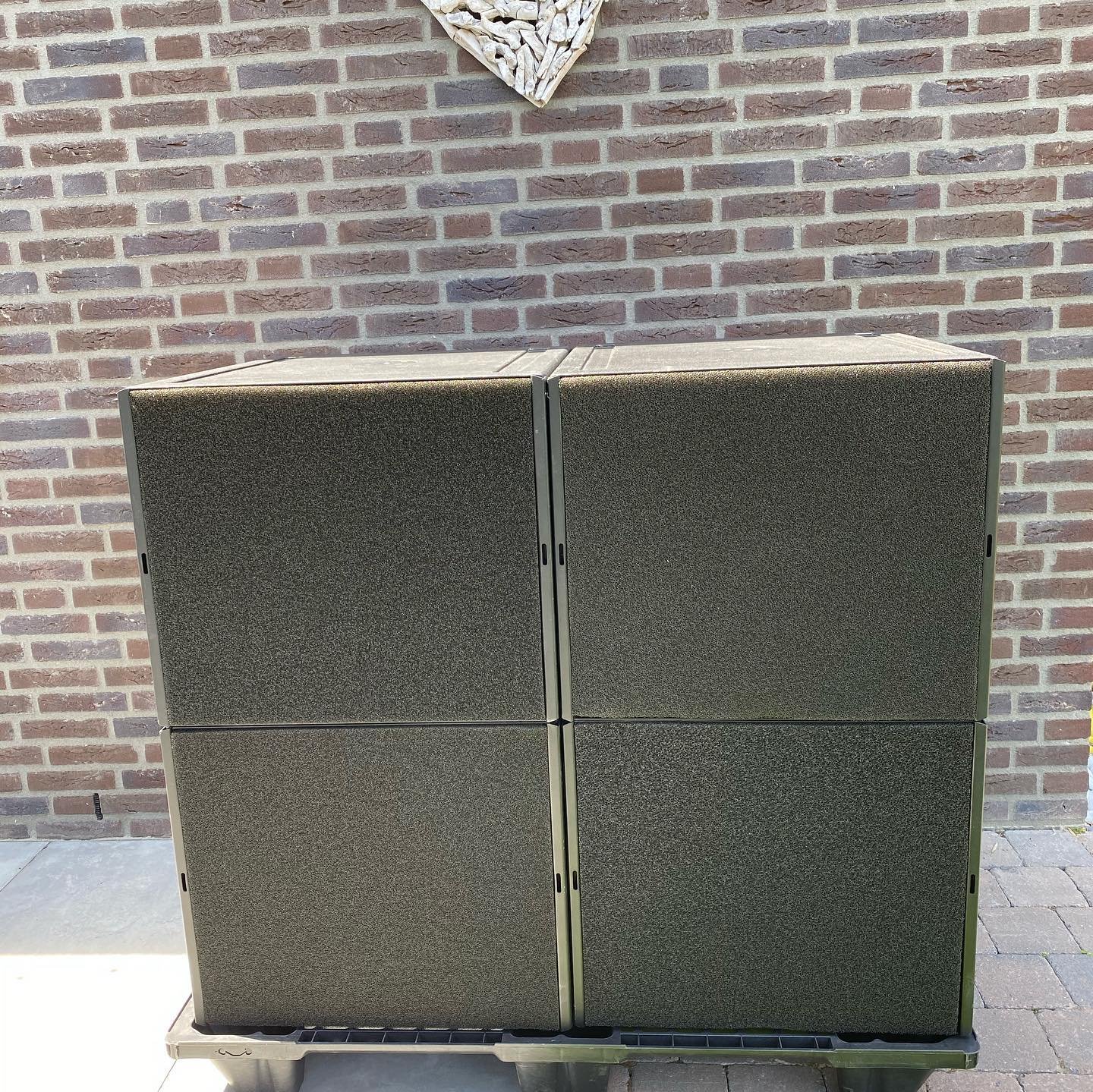
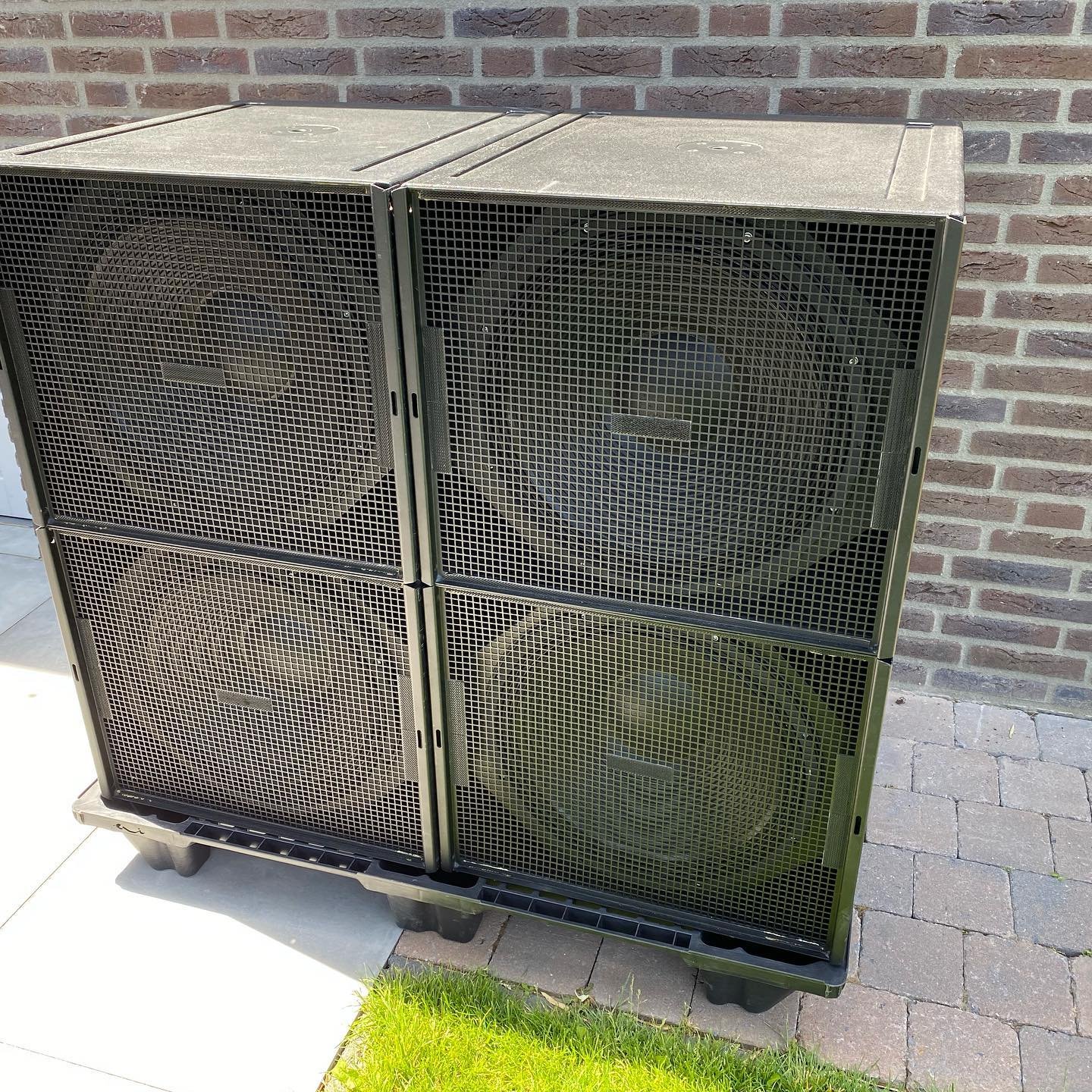
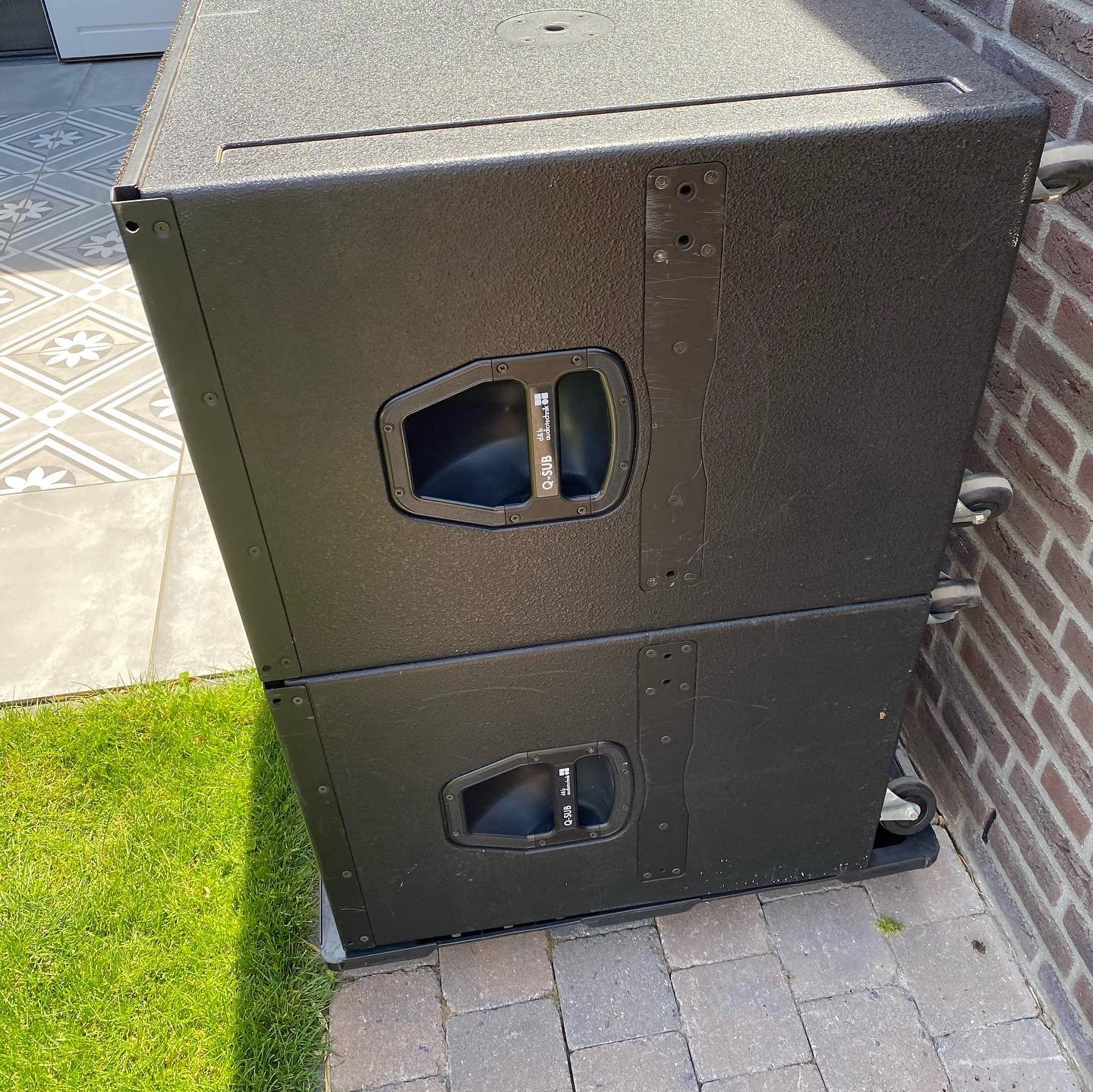
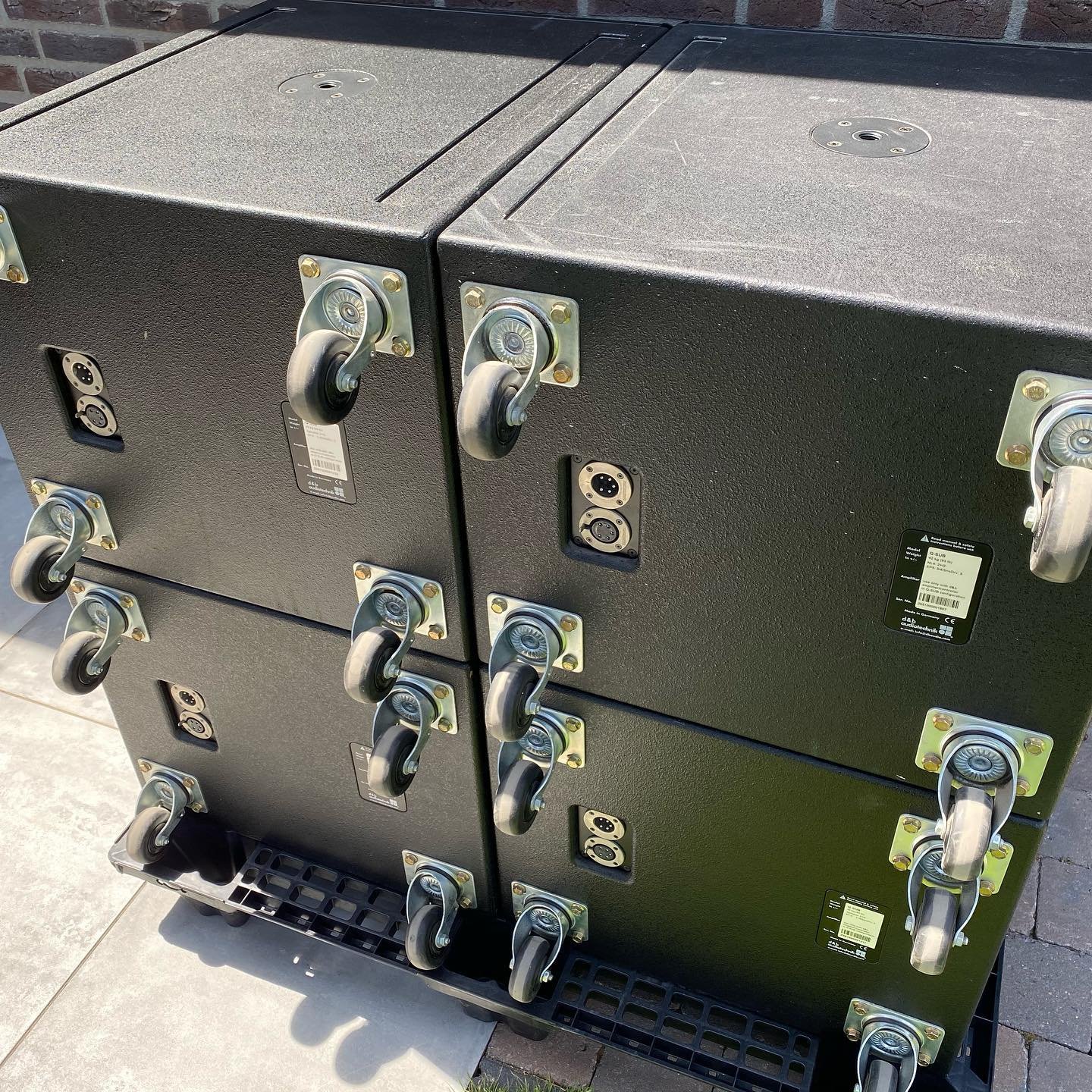
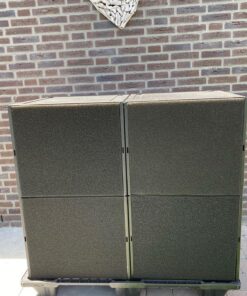
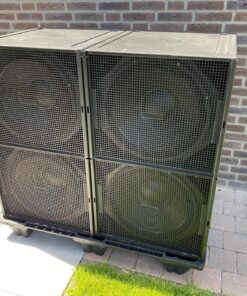
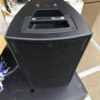
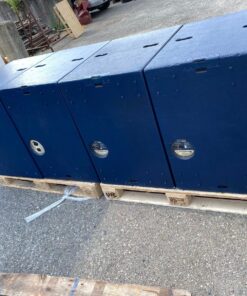
Buy d&b audiotechnik Q-SUB – 18-Inch Professional Bass-Reflex Subwoofer
The d&b audiotechnik Q-SUB is a professional 18-inch bass-reflex subwoofer designed to deliver powerful, controlled low-frequency reinforcement for Q-Series loudspeaker systems. Built for touring productions, concert venues, theatres, and permanent installations, it combines substantial bass output with the flexibility of flown and ground-stacked deployment.
Equipped with a single high-excursion 18-inch driver, the Q-SUB provides low-frequency reproduction extending to approximately 40 Hz. Its dedicated amplifier configurations allow engineers to adapt the subwoofer to different system requirements, including conventional bass reinforcement and cardioid subwoofer array applications.
The Q-SUB is particularly useful alongside d&b Q1 and Q7 loudspeakers, providing the low-frequency foundation required for full-range professional sound reinforcement.
For rental companies and system operators maintaining established Q-Series inventories, the Q-SUB offers a practical combination of acoustic performance, compatible rigging, and professional touring construction.
Powerful Bass Reinforcement for d&b Q-Series Systems
The Q-SUB was developed to complement the acoustic and mechanical characteristics of d&b audiotechnik’s Q-Series loudspeakers.
Its bass-reflex enclosure and high-excursion driver provide the low-frequency output needed for demanding live sound applications without requiring multiple drivers in a single cabinet.
Key Features
- Single 18-inch high-excursion low-frequency driver
- Professional bass-reflex enclosure
- Frequency response extending to approximately 40 Hz
- Maximum SPL up to approximately 133 dB, amplifier-dependent
- Standard and 100 Hz operating modes
- Compatible with suitable Q-Series loudspeakers
- Flown and ground-stacked deployment options
- Cardioid Subwoofer Array (CSA) capability
- SenseDrive support with appropriate amplifier and cabling
- Integrated handles and rear transport wheels
- Professional plywood cabinet construction
- EP5 or NL4 connector configurations
The combination of these features makes the Q-SUB relevant to both portable touring systems and permanent sound installations.
d&b Q-SUB Technical Specifications
| Specification | Details |
|---|---|
| Manufacturer | d&b audiotechnik |
| Model | Q-SUB |
| Loudspeaker type | Passive bass-reflex subwoofer |
| Low-frequency driver | 1 × 18-inch high-excursion |
| Standard frequency response | 40 Hz–130 Hz (-5 dB) |
| 100 Hz mode frequency response | 40 Hz–100 Hz (-5 dB) |
| Maximum SPL | Up to approximately 133 dB |
| Lower-output amplifier configurations | Approximately 129 dB |
| Power handling | 400 W RMS / 1,600 W peak (10 ms), as supplied |
| Nominal impedance | 8 Ω |
| Enclosure material | Marine plywood |
| Finish | Impact-resistant black coating |
| Front grille | Metal with acoustically transparent foam |
| Handles | 2 recessed |
| Transport wheels | 4 rear-mounted |
| Standard/optional connectors | EP5 or NL4, depending on version |
| SenseDrive | Supported with appropriate D12 and EP5 configuration |
| Rigging | Q-Series-compatible mounting provisions |
| Pole mounting | M20 flange, configuration-dependent |
| Dimensions (H × W × D) | Approximately 493 × 580 × 668 mm |
| Weight | Approximately 42 kg |
| Amplification | Compatible external d&b amplifier |
Specifications are based on the supplied product information. Confirm the exact cabinet version, amplifier support, connector arrangement, and rigging requirements against the relevant d&b audiotechnik documentation.
Inside the Q-SUB: High-Excursion 18-Inch Driver
At the centre of the Q-SUB is a single 18-inch low-frequency driver designed for professional high-output applications.
The driver operates within a bass-reflex enclosure, using the cabinet’s acoustic design to support efficient low-frequency reproduction.
High-Excursion Performance
Low-frequency sound reproduction requires significant driver movement, particularly at higher output levels.
The Q-SUB’s high-excursion driver is designed to handle these demands within its specified operating limits.
Bass-Reflex Cabinet Design
The bass-reflex enclosure uses a tuned acoustic arrangement to support low-frequency output.
This design contributes to the Q-SUB’s ability to reproduce bass frequencies down to approximately 40 Hz.
Professional Music Reinforcement
The Q-SUB is suitable for reinforcing the low-frequency content of live instruments, electronic music, recorded playback, and other demanding programme material.
Controlled System Operation
Correct amplifier processing is essential for maintaining the intended frequency response and protecting the driver.
The Q-SUB should be operated using a compatible amplifier configuration rather than an arbitrary unprocessed amplifier output.
Standard Mode vs 100 Hz Mode
The Q-SUB provides different operating configurations to accommodate various system designs.
The supplied specifications identify standard operation and a selectable 100 Hz mode.
| Operating mode | Frequency response | Typical purpose |
|---|---|---|
| Standard | 40 Hz–130 Hz | General low-frequency reinforcement |
| 100 Hz | 40 Hz–100 Hz | Reduced upper-bass bandwidth |
Standard Operating Mode
In standard mode, the Q-SUB reproduces frequencies from approximately 40 Hz to 130 Hz.
This configuration provides the broader operating bandwidth identified in the supplied specifications.
It can be used when integrating the subwoofer with suitable full-range loudspeakers.
100 Hz Mode
The 100 Hz configuration reduces the upper end of the subwoofer’s operating range.
This may be useful when a system requires a lower transition frequency between the subwoofers and the main loudspeakers.
Choosing the Right Configuration
The appropriate mode depends on the main loudspeaker model, amplifier processing, system alignment, and intended application.
The 100 Hz setting changes the upper operating bandwidth; it does not extend the Q-SUB’s specified low-frequency response below 40 Hz.
Designed to Work with d&b Q1 and Q7 Loudspeakers
One of the Q-SUB’s principal advantages is its integration with compatible Q-Series loudspeakers.
The supplied information specifically identifies the d&b Q1 and Q7.
Q-SUB with d&b Q1
The Q1 is a passive line array loudspeaker designed for vertical array deployment.
When used with suitable Q-SUB cabinets, the system gains dedicated low-frequency reinforcement.
This combination is relevant to touring concerts, festivals, and fixed installations requiring full-range sound.
Q-SUB with d&b Q7
The Q7 is a point-source loudspeaker within the Q-Series family.
The Q-SUB can provide additional bass output beneath suitable Q7 systems.
This arrangement may be useful for venues and event productions where compact main loudspeakers require dedicated low-frequency support.
Benefits of Matching System Components
Using compatible loudspeakers and subwoofers can simplify system design by providing access to the intended amplifier configurations and documented integration options.
However, correct alignment, placement, and processing remain essential.
Flown and Ground-Stacked Configurations
The Q-SUB is designed for flexible deployment within compatible Q-Series systems.
This is particularly valuable to touring companies that need to adapt equipment to different stages, venues, and audience layouts.
Flown Q-Series Systems
The supplied information identifies the Q-SUB as suitable for approved flown configurations.
It can be incorporated into appropriate Q-Series rigging arrangements using the required manufacturer-approved hardware.
Ground-Stacked Subwoofers
Ground deployment is common in professional concert systems.
Q-SUB cabinets can be positioned as part of a suitable ground-supported bass system.
Pole-Mounted Loudspeakers
The supplied information references an M20 pole-mounting flange.
Where the correct mounting arrangement is supported, a compatible loudspeaker may be positioned above the subwoofer using approved hardware.
Touring Flexibility
Having both flown and ground-supported options allows system designers to adapt the equipment to the venue.
Rigging Safety
Flown subwoofer systems require careful structural planning.
The permissible configuration depends on the exact rigging hardware, cabinet condition, total load, and manufacturer documentation.
Never use unverified mounting hardware or assume that a cabinet’s integrated rigging provisions permit every possible suspension arrangement.
Cardioid Subwoofer Arrays with Q-SUB
Low-frequency directivity is an important consideration in professional sound reinforcement.
Conventional subwoofer arrangements often radiate substantial acoustic energy both toward and behind the cabinets.
In some applications, this can create unwanted bass levels on stage or in surrounding areas.
The Q-SUB can be used in suitable Cardioid Subwoofer Array configurations with appropriate processing.
What Is a Cardioid Subwoofer Array?
A cardioid subwoofer array uses multiple subwoofers arranged and processed to reduce acoustic output in a selected direction, typically behind the system.
This can help manage low-frequency energy in challenging environments.
Three-Cabinet CSA Arrangements
The supplied information references three-cabinet configurations in which a Q-SUB can operate as a rear-facing element.
The intended acoustic result depends on correct cabinet positioning and dedicated processing.
Benefits of Cardioid Bass Control
Cardioid configurations can help with:
- Reducing unwanted bass behind the subwoofer system
- Managing low-frequency energy on stage
- Improving control in acoustically challenging venues
- Limiting unnecessary rearward sound radiation
- Supporting more predictable low-frequency system design
Important Processing Requirements
CSA operation requires the correct amplifier settings, cabinet orientation, and channel assignments.
Not every amplifier platform supports the same configurations.
The exact array arrangement should follow manufacturer-approved instructions.
SenseDrive Functionality
The supplied specifications identify SenseDrive support when the Q-SUB is used with a suitable d&b D12 amplifier and EP5 cabling.
SenseDrive is a loudspeaker control technology associated with compensation for the electrical effects of loudspeaker cables.
Why Cable Effects Matter
Long speaker cables introduce electrical resistance.
This resistance can influence the relationship between the amplifier and the loudspeaker.
SenseDrive Operation
With compatible equipment and wiring, SenseDrive provides feedback-based compensation intended to improve low-frequency system control.
EP5 Connector Requirement
The supplied information associates SenseDrive operation with the appropriate EP5 connection configuration.
Amplifier Compatibility
SenseDrive availability depends on the amplifier and supported loudspeaker configuration.
It should not be assumed to work with every amplifier or connector arrangement.
Amplifier Compatibility and Channel Loading
The Q-SUB is a passive subwoofer requiring suitable external amplification.
The supplied specifications reference several d&b amplifier platforms.
| Amplifier | Supplied compatibility information |
|---|---|
| d&b D6 | Referenced Q-SUB operation |
| d&b D12 | Referenced Q-SUB operation and SenseDrive |
| d&b D20 | Referenced Q-SUB operation |
| d&b D80 | Referenced Q-SUB operation |
| d&b D30 | Referenced Q-SUB operation; exact model designation requires verification |
| d&b E-PAC | Referenced operation with limitations |
The availability of Q-SUB presets and operating modes depends on the specific amplifier and firmware.
Maximum SPL Differences
The supplied information identifies maximum SPL figures of approximately 133 dB with certain higher-output amplifier configurations and approximately 129 dB with selected lower-output platforms.
These figures should be verified against the relevant manufacturer specifications.
Two Subwoofers per Channel
The supplied information describes typical arrangements involving two Q-SUB cabinets per amplifier channel.
However, the approved number depends on amplifier capability, nominal impedance, wiring, and operating mode.
Dedicated Processing
Compatible d&b amplifiers provide the loudspeaker-specific processing needed for appropriate operation.
Cardioid Operation
CSA configurations may require separate amplifier channels and dedicated settings for different subwoofer positions.
Amplifier Selection
Before purchasing, confirm that the intended amplifier supports the Q-SUB configuration required for the complete system.
Touring-Grade Cabinet Construction
The Q-SUB is built around a marine plywood enclosure with a protective black finish.
Its construction is intended for professional applications where equipment must withstand regular transport and handling.
Marine Plywood Enclosure
The cabinet provides a rigid structure for the high-excursion 18-inch driver.
Protective Coating
The impact-resistant finish helps protect the enclosure during normal professional use.
Metal Front Grille
A rigid metal grille protects the driver from accidental contact and external impacts.
Acoustic Foam
The grille is backed with acoustically transparent foam.
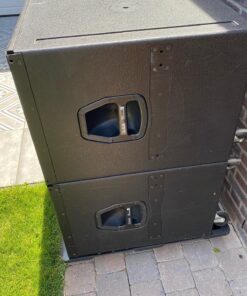
Recessed Handles
Two handles support lifting and positioning.
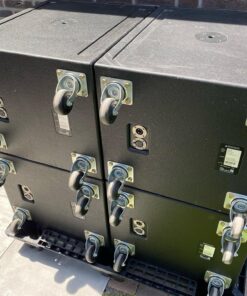
Rear Transport Wheels
Four rear-mounted wheels are identified in the supplied specifications.
These can simplify movement during loading, unloading, and stage preparation.
The condition and inclusion of wheels should be confirmed when purchasing used equipment.
Dimensions and Weight
| Measurement | Approximate value |
|---|---|
| Height | 493 mm |
| Width | 580 mm |
| Depth | 668 mm |
| Weight | 42 kg |
The listed dimensions exclude transport wheels.
At approximately 42 kg, the Q-SUB requires appropriate handling during transport and installation.
Transport Planning
The cabinet dimensions should be considered when planning vehicle loading, storage, and access to venues.
Ground Deployment
Stable placement is important, especially when additional equipment is mounted above the cabinet.
Flown Systems
The total suspended load must include the subwoofer, rigging hardware, and all other attached components.
Rental Inventories
Matching cabinet dimensions can help simplify equipment storage and system organisation.
Professional Applications for the d&b Q-SUB
Concert Touring
The Q-SUB provides dedicated bass reinforcement for suitable Q-Series touring systems.
Live Music Festivals
Multiple Q-SUB cabinets can be incorporated into appropriately designed festival sound systems.
Nightclubs
The Q-SUB may be useful in club installations requiring professional low-frequency reinforcement.
Theatre Productions
Its compatibility with Q-Series loudspeakers makes it relevant to selected theatre sound systems.
Houses of Worship
The Q-SUB can provide bass extension for suitable installed sound reinforcement systems.
Corporate Events
Professional event companies may use Q-SUB cabinets where music playback and full-range reinforcement are required.
Permanent Installations
The Q-SUB can be integrated into compatible fixed sound systems.
Cardioid Bass Systems
Where rearward bass reduction is important, the Q-SUB may be used in suitable CSA arrangements.
Why the Q-SUB Is Useful for Existing Q-Series Owners
For professional companies already operating Q-Series equipment, additional Q-SUB cabinets may provide practical benefits.
Expand Low-Frequency Capacity
Additional subwoofers can increase the available bass reinforcement for suitable system configurations.
Replace Existing Cabinets
Matching units may be useful when replacing damaged or retired equipment.
Maintain Equipment Consistency
Using the same subwoofer model can simplify inventory management.
Reuse Compatible Equipment
Existing amplifiers, cables, and rigging accessories may remain useful, subject to compatibility.
Build Larger Systems
Multiple Q-SUB cabinets can be combined into appropriate low-frequency arrangements.
Preserve Familiar Workflows
Engineers experienced with Q-Series systems may prefer to continue operating familiar equipment.
Because the Q-SUB is an established model, buyers should also consider component condition, spare-part availability, and long-term amplifier support.
What to Check Before Buying a Used d&b Q-SUB
A used professional subwoofer should be evaluated for both acoustic performance and mechanical condition.
1. Inspect the 18-Inch Driver
Check for abnormal noise, distortion, or evidence of previous damage.
2. Test the Cabinet
Request a functional demonstration using a compatible amplifier.
3. Examine the Enclosure
Look for cracks, moisture damage, loose joints, or structural repairs.
4. Check the Front Grille
Inspect the metal grille and acoustic foam.
5. Verify Connector Type
Confirm whether the cabinet uses EP5 or NL4 connectors.
6. Inspect the Rigging Hardware
Check all mounting points, locking pins, and other mechanical connections.
7. Check the Wheels
Verify that the rear wheels are present and functional.
8. Review Service History
Ask whether the driver, connectors, or cabinet components have been repaired or replaced.
9. Confirm Amplifier Compatibility
Ensure that the intended amplifier supports the required Q-SUB configuration.
10. Verify SenseDrive Requirements
If SenseDrive is important, confirm the appropriate amplifier and EP5 wiring arrangement.
11. Confirm Quantity
Determine whether the offer includes one cabinet, a pair, or a larger group.
12. Check Included Accessories
Ask whether speaker cables, rigging hardware, transport accessories, or amplifiers are included.
13. Request Serial Numbers
Serial numbers can help identify the equipment and relevant documentation.
14. Confirm Price and Condition
The supplied information does not specify the current selling price, available quantity, or equipment condition.
Contact Electronic Space for these details.
Frequently Asked Questions About d&b Q-SUB
What is the d&b Q-SUB?
The Q-SUB is a professional passive 18-inch bass-reflex subwoofer designed for compatible Q-Series loudspeaker systems.
What size driver does the Q-SUB use?
It contains one 18-inch high-excursion low-frequency driver.
What is the frequency response of the Q-SUB?
Approximately 40 Hz–130 Hz in standard mode and 40 Hz–100 Hz in the selectable 100 Hz mode.
Is the Q-SUB active or passive?
It is a passive subwoofer requiring external amplification.
How loud is the Q-SUB?
The supplied specifications identify maximum SPL up to approximately 133 dB, depending on amplifier configuration.
What is the nominal impedance?
8 ohms.
What is the power handling?
The supplied figures are 400 W RMS and 1,600 W peak over a short-duration interval.
Can the Q-SUB be used with d&b Q1?
Yes. The Q-SUB is designed for integration with compatible Q-Series loudspeakers, including the Q1.
Can the Q-SUB be used with d&b Q7?
Yes. It can provide low-frequency reinforcement for suitable Q7 systems.
Can the Q-SUB be flown?
Yes, in approved configurations using the appropriate manufacturer-authorised rigging equipment.
Can the Q-SUB be ground-stacked?
Yes. Ground deployment is suitable for appropriate system configurations.
What is the 100 Hz mode?
It reduces the upper operating bandwidth of the subwoofer to approximately 100 Hz.
Does 100 Hz mode produce deeper bass?
No. The supplied specifications identify the same approximate 40 Hz lower frequency limit in both modes.
Does the Q-SUB support cardioid arrays?
Yes. It can be used in suitable Cardioid Subwoofer Array configurations with compatible processing.
What is SenseDrive?
SenseDrive is a d&b technology that provides compensation for speaker cable effects in supported systems.
Does the Q-SUB support SenseDrive with D12?
The supplied information identifies SenseDrive compatibility with appropriate D12 and EP5 configurations.
Can I use a D20 amplifier with Q-SUB?
The supplied specifications reference D20 operation. Confirm the required loudspeaker preset and firmware support.
Can I use a D80 amplifier with Q-SUB?
The supplied specifications reference D80 operation, subject to the correct configuration.
How many Q-SUB cabinets can be connected to one amplifier channel?
The supplied information references typical configurations involving two cabinets per channel. Confirm the permitted loading for the exact amplifier.
What connectors does the Q-SUB use?
EP5 or NL4, depending on the cabinet version.
How much does the Q-SUB weigh?
Approximately 42 kg.
What are its dimensions?
Approximately 493 × 580 × 668 mm, excluding wheels.
Does the Q-SUB have wheels?
The supplied specifications identify four rear-mounted transport wheels.
Is the Q-SUB suitable for nightclubs?
Yes. It can be used in suitable professional club sound systems.
Is the Q-SUB suitable for touring?
Yes. Its professional construction and Q-Series integration make it relevant to touring applications.
Is buying a used Q-SUB worthwhile?
It can be a practical option for operators maintaining compatible Q-Series systems, provided the cabinet is in suitable condition.
How much does a d&b Q-SUB cost?
Pricing depends on condition, quantity, and included accessories. Contact Electronic Space for a quotation.
Buy d&b audiotechnik Q-SUB from Electronic Space
The d&b audiotechnik Q-SUB combines professional 18-inch bass reproduction with flexible system integration and robust touring construction.
Its bass-reflex design, selectable operating modes, Q-Series compatibility, and support for suitable cardioid configurations make it a useful component in established professional sound reinforcement systems.
For rental companies, touring operators, and venue owners using d&b Q1 or Q7 loudspeakers, the Q-SUB offers a practical solution for extending low-frequency performance while maintaining compatibility with existing equipment.
Electronic Space assists professional buyers looking for d&b audiotechnik loudspeakers, subwoofers, amplifiers, and complete sound systems.
Contact Electronic Space to request Q-SUB pricing, confirm equipment condition and available quantity, verify amplifier compatibility, and discuss delivery arrangements.
Be the first to review “D&B audiotechnik Q‑SUB”
Related products
D&B Audiotechnik
Power Amps
Power Amps
Power Amps
Power Amps
Power Amps
Mc2 Audio Amplifiers
Reviews
There are no reviews yet.