
 Deutsch
 Nederlands
 Polski
 Italiano
 Français
 Español
 Română

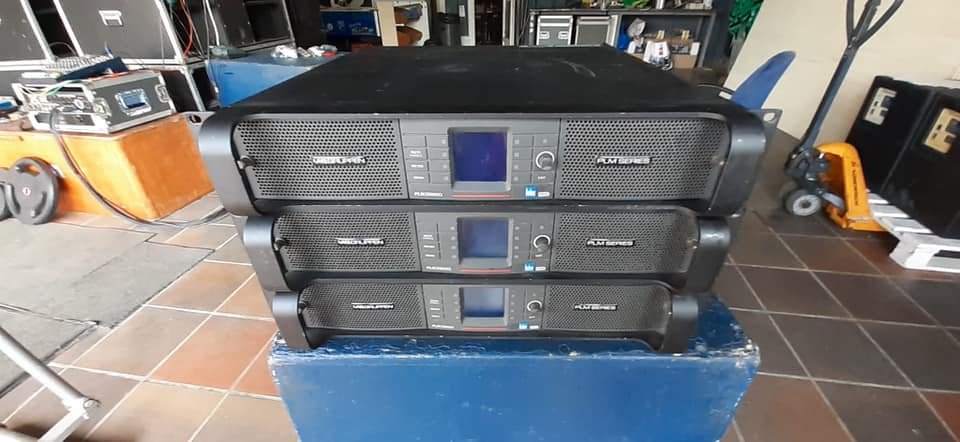
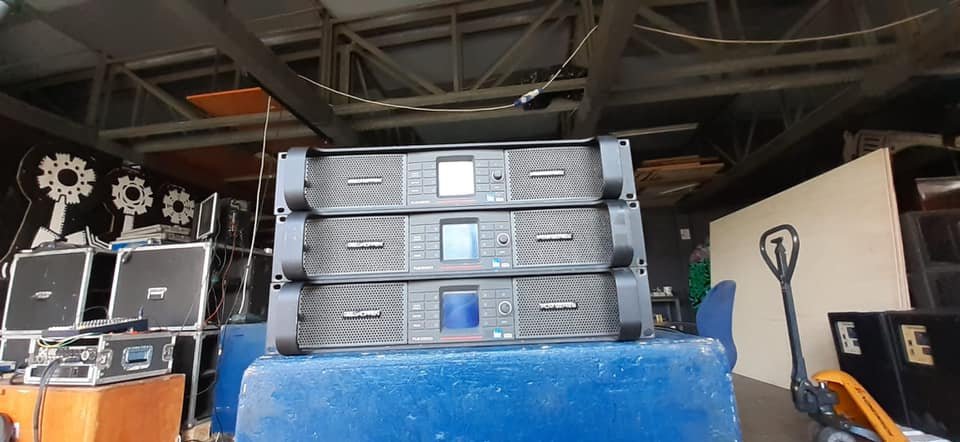
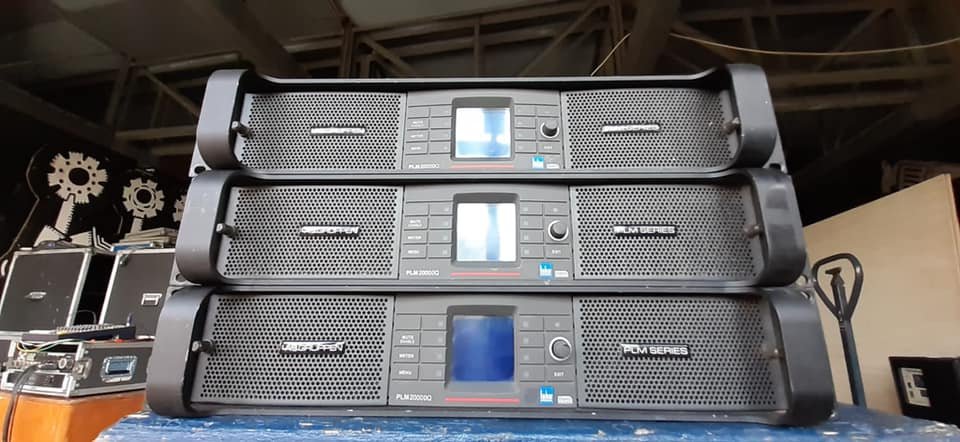
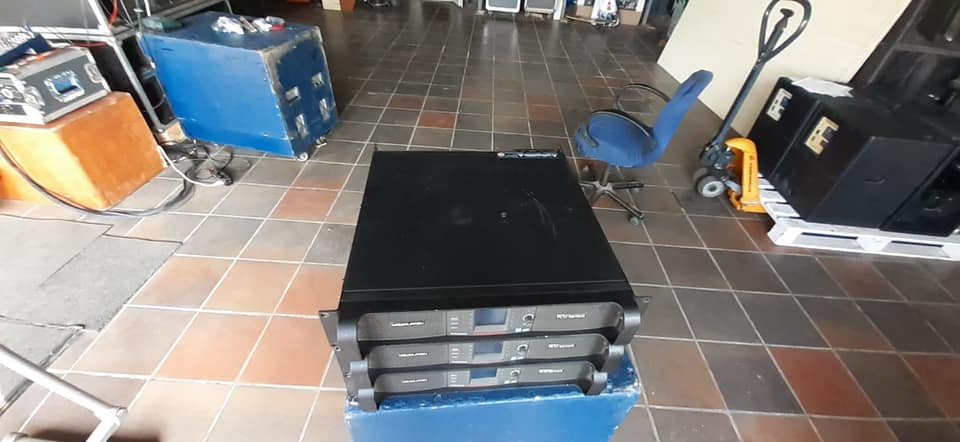
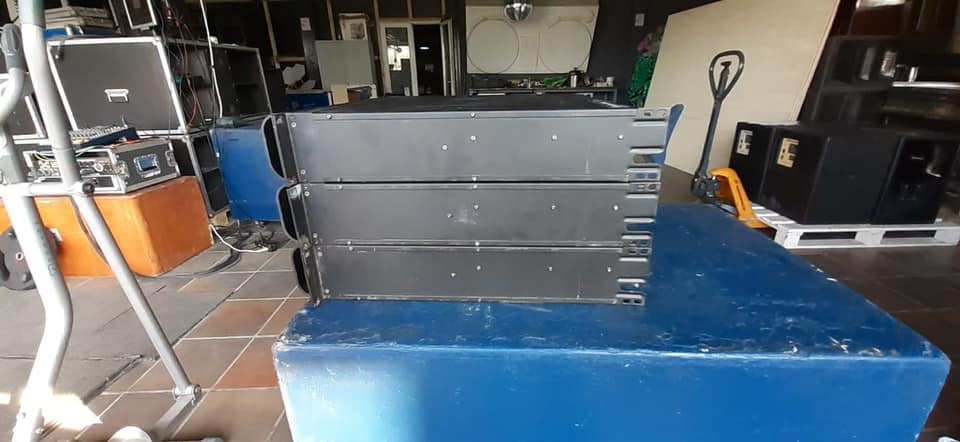
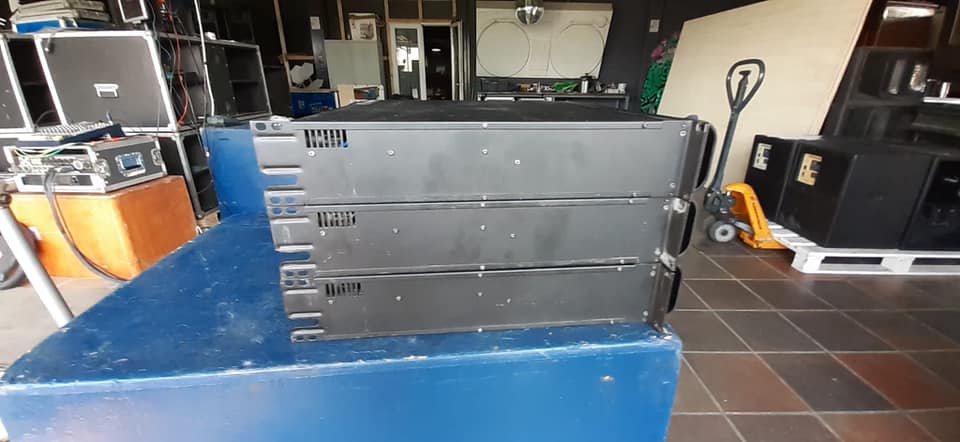
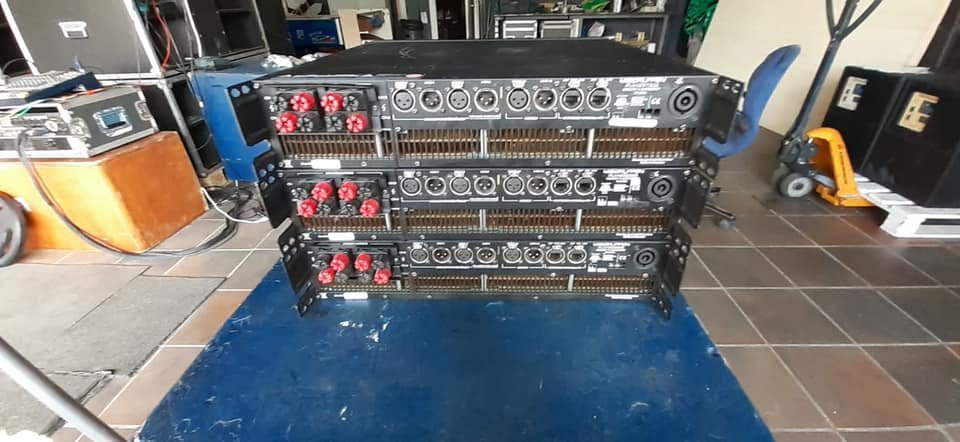
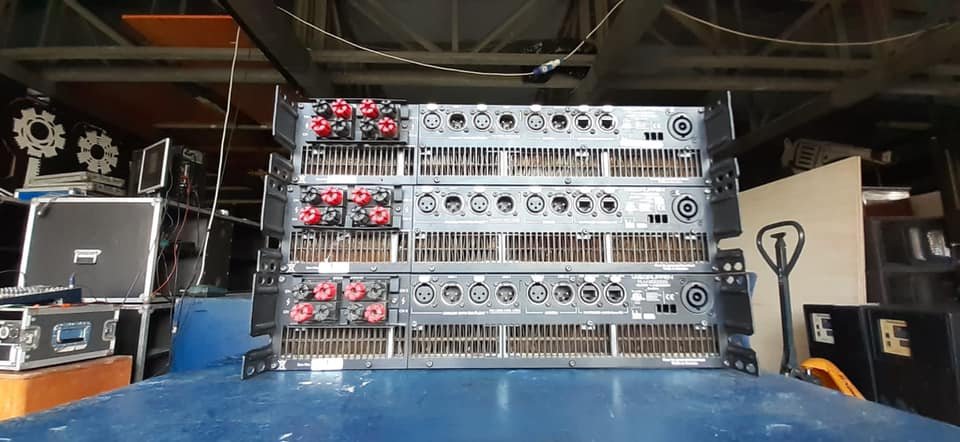
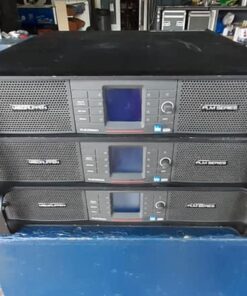
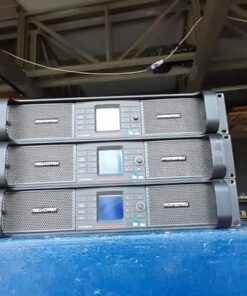
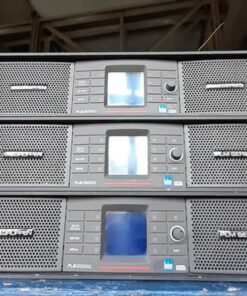
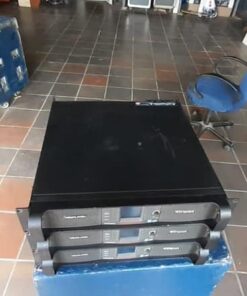
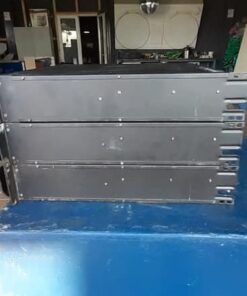
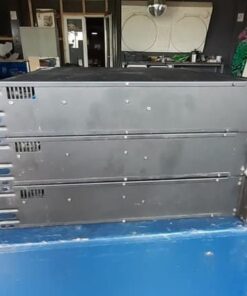
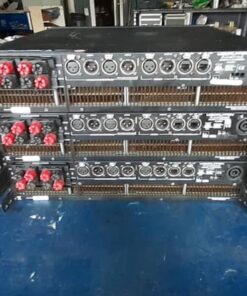
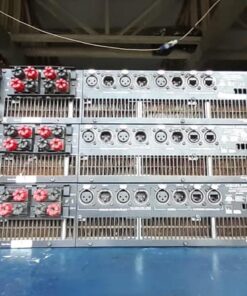
Buy Lab Gruppen PLM 20000Q – 4-Channel Amplifier with Lake DSP
The Lab Gruppen PLM 20000Q is a professional four-channel power amplifier and loudspeaker management system designed for large touring productions, festival PA systems, arena sound reinforcement, and demanding fixed installations.
Combining Class TD amplification, integrated Lake processing, Dante digital audio networking, and Rational Power Management (RPM), the PLM 20000Q provides powerful amplification and advanced system control in a single 2U rackmount unit.
With a stated output capability of up to 4 × 5000 W at 2 ohms, the amplifier is designed for professional loudspeaker systems requiring substantial power, flexible channel allocation, and precise processing.
Unlike conventional power amplifiers that depend on separate loudspeaker controllers, the PLM 20000Q integrates DSP directly into the amplifier platform. This allows engineers to manage crossover filters, equalisation, delays, and loudspeaker protection through a coordinated system.
For touring companies and professional audio rental providers, this combination can simplify amplifier racks while providing detailed control over complex loudspeaker configurations.
Lab Gruppen PLM 20000Q for Sale in Europe
The PLM 20000Q is designed for sound professionals who need more than conventional two-channel amplification.
Its four-channel architecture makes it suitable for systems involving multiple loudspeaker sections, high-output subwoofers, or independently processed PA zones.
Typical applications include:
- Arena and stadium sound reinforcement
- Festival main-stage PA systems
- Large-format touring line arrays
- Professional subwoofer amplification
- Multiway active loudspeaker systems
- High-end nightclub installations
- Professional rental amplifier racks
For buyers considering used PLM 20000Q amplifiers, DSP functionality, network connections, firmware compatibility, and overall electrical condition are particularly important.
Four-Channel High-Power Amplification
The PLM 20000Q provides four amplifier channels within a single professional touring chassis.
This allows system designers to allocate amplification across different loudspeaker groups without requiring a separate amplifier for every pair of channels.
The supplied reference identifies the following output ratings:
| Loudspeaker load | Stated power output |
|---|---|
| 8 Ω | 4 × 2100 W |
| 4 Ω | 4 × 4000 W |
| 2 Ω | 4 × 5000 W |
| Total nominal output capability | Up to 20,000 W |
These ratings are taken from the supplied description. Exact output depends on the manufacturer’s measurement conditions, power allocation, mains supply, and operating configuration.
Power for Large PA Systems
High-output professional loudspeakers require amplifier power that is appropriate for their impedance, sensitivity, and operating range.
The PLM 20000Q is intended for systems where several loudspeaker sections may need different levels of power.
For example, a touring amplifier rack may need to support high-power bass cabinets alongside lower-power midrange or high-frequency sections.
Four-channel amplification helps make these configurations more manageable.
Integrated Lake DSP Processing
One of the most important features of the PLM 20000Q is its integrated Lake loudspeaker processing platform.
Lake processing provides professional tools for shaping, aligning, and protecting loudspeaker systems.
Rather than routing audio through a separate DSP controller before reaching the amplifier, engineers can manage processing within the PLM platform itself.
Lake Processing Functions
The supplied feature set includes:
- FIR and IIR filtering
- Parametric equalisation
- Crossover management
- Delay and time alignment
- Loudspeaker response optimisation
- Output limiting and protection
- Phase and frequency-response management
These functions are essential in complex sound reinforcement systems where several loudspeaker cabinets must operate together.
Why Integrated DSP Matters
In a conventional touring rack, loudspeaker processing and power amplification may occupy separate hardware units.
The PLM 20000Q combines these functions, reducing the need for external processing hardware in suitable applications.
This can simplify signal routing, reduce rack cabling, and make system configuration more consistent between venues.
Lake Controller Software and Remote Management
The PLM 20000Q can be managed using Lake Controller software.
This provides a central environment for configuring amplifier processing and managing supported devices across a professional audio network.
Engineers can use Lake Controller to work with equalisation, crossover settings, delays, and other loudspeaker management parameters.
For touring companies operating multiple amplifier racks, centralised control is particularly useful.
It allows technicians to manage system settings without adjusting every amplifier individually.
Real-Time System Monitoring
Networked amplifier management can also help engineers monitor operating conditions and identify potential problems during setup or performance.
Depending on the available device telemetry and software configuration, this can include information about amplifier operation, signal levels, and fault conditions.
Such visibility is valuable during large events where amplifiers may be distributed across multiple racks or locations.
Dante Digital Audio Networking
The PLM 20000Q supports Dante digital audio networking, allowing audio to be distributed over compatible Ethernet infrastructure.
Dante is particularly useful in large touring systems where many audio channels must travel between consoles, processing systems, and amplifier racks.
Instead of relying exclusively on individual analogue signal cables, engineers can route compatible digital audio channels through a network.
Advantages of Dante Integration
Dante networking can help with:
- Digital signal distribution
- Reduced analogue cabling
- Flexible audio routing
- Integration with compatible digital consoles
- Large multi-rack amplifier systems
- Networked touring infrastructure
The supplied description also identifies redundant networking capability.
Network redundancy requires correct hardware connections, network topology, and configuration; it should not be assumed to function automatically.
Rational Power Management (RPM)
Rational Power Management is a significant feature of the PLM platform.
RPM allows engineers to configure how available amplifier power is allocated among output channels within the unit’s supported limits.
This is particularly valuable in multiway loudspeaker systems.
A low-frequency driver may require substantially more amplifier power than a high-frequency compression driver.
Instead of treating every channel as an identical load, RPM helps adapt the amplifier’s available resources to the connected loudspeakers.
Practical RPM Example
Consider a system containing:
- Two high-power bass cabinets
- One midrange loudspeaker section
- One high-frequency loudspeaker section
These loads do not necessarily require equal power.
RPM allows the system designer to configure channel resources around the actual requirements, subject to the amplifier’s operating limits.
This can improve amplifier utilisation and reduce unnecessary hardware in suitable system designs.
Class TD Amplifier Technology
The PLM 20000Q uses Lab Gruppen’s Class TD amplifier architecture.
Class TD combines a Class AB-style output stage with efficient power supply technology.
The design aims to deliver substantial power while managing electrical losses and heat generation.
For professional touring applications, this supports high power density within a compact rackmount enclosure.
Class TD is distinct from conventional Class D output-stage amplification, even though both technologies pursue efficient high-power operation.
Connectivity and Signal Integration
The PLM 20000Q supports multiple audio input formats for integration into professional sound systems.
| Connection or interface | Purpose |
|---|---|
| Analogue audio inputs | Conventional audio signal connection |
| AES/EBU digital inputs | Digital audio integration |
| Dante networking | Networked digital audio transport |
| Loudspeaker outputs | Connection to passive loudspeakers |
| Ethernet control | Lake Controller communication |
The supplied reference identifies speakON loudspeaker outputs.
Buyers should confirm the connector arrangement, input configuration, and firmware revision of the specific unit before installation.
Lab Gruppen PLM 20000Q Technical Specifications
| Specification | Details |
|---|---|
| Manufacturer | Lab Gruppen |
| Model | PLM 20000Q |
| Equipment type | Amplified loudspeaker management system |
| Amplifier channels | 4 |
| Amplifier technology | Class TD |
| Output at 8 Ω | 4 × 2100 W, as supplied |
| Output at 4 Ω | 4 × 4000 W, as supplied |
| Output at 2 Ω | 4 × 5000 W, as supplied |
| Total stated output | Up to 20,000 W |
| DSP platform | Integrated Lake processing |
| Digital audio networking | Dante |
| Digital audio inputs | AES/EBU |
| Analogue inputs | Supported |
| Power management | Rational Power Management |
| Remote control | Lake Controller |
| Rack height | 2U |
| Cooling | Forced-air thermal management |
| Loudspeaker outputs | Professional speaker connections |
| Applications | Touring, festivals, arenas, installations |
Numerical output figures are based on the supplied product information. Manufacturer documentation should be consulted for simultaneous-channel ratings, mains power requirements, connector details, and supported DSP features.
Touring Rack Efficiency
The PLM 20000Q combines amplification and loudspeaker processing in one chassis.
This can reduce the amount of separate hardware required in professional touring racks.
For rental companies managing large equipment inventories, integrated processing also provides a consistent control environment across compatible amplifier systems.
The practical benefits include simpler signal routing, fewer standalone processor units, and centralised configuration.
However, engineers must still plan suitable mains distribution, cooling, networking, and loudspeaker cabling.
Buying Used Lab Gruppen PLM 20000Q Amplifiers
Because the PLM 20000Q combines high-power amplification with networked DSP, purchasing a used unit requires more than checking that audio passes through its outputs.
Both the amplifier hardware and the digital management functions should be tested.
Important checks include:
- All four amplifier channels
- Lake DSP operation
- Dante audio connectivity
- AES/EBU input functionality
- Ethernet control communication
- Cooling fans and ventilation
- Front-panel indicators
- Firmware compatibility
- Output connectors
- Previous service or repair history
A complete functional test should confirm that the amplifier can be recognised and configured through compatible Lake Controller software.
For professional touring use, buyers should also confirm compatibility with their existing loudspeaker presets and network infrastructure.
Frequently Asked Questions
What is the Lab Gruppen PLM 20000Q?
The PLM 20000Q is a four-channel professional power amplifier with integrated Lake DSP processing and digital audio networking.
How much power does the PLM 20000Q deliver?
The supplied reference lists up to 4 × 5000 W at 2 ohms, with output depending on operating conditions and power allocation.
Does the PLM 20000Q include Lake DSP?
Yes. Integrated Lake processing provides loudspeaker management functions including EQ, crossover filtering, delays, and limiting.
Does the PLM 20000Q support Dante?
Yes. Dante networking allows compatible digital audio to be routed to the amplifier over Ethernet.
What is Rational Power Management?
RPM is a Lab Gruppen technology that allows available amplifier power resources to be allocated according to the requirements of connected loudspeaker channels.
Can the PLM 20000Q power subwoofers?
Yes. It can be used with compatible professional subwoofers when power, impedance, and processing requirements are correctly configured.
Is the PLM 20000Q suitable for line arrays?
Yes. It is designed for professional multi-channel amplification and loudspeaker management, making it relevant to compatible touring line array systems.
Does the PLM 20000Q need an external DSP processor?
Its integrated Lake processing can handle many loudspeaker management tasks without a separate external processor.
What should I check before buying a used PLM 20000Q?
Test all four channels, Lake processing, Dante networking, control communication, cooling, and firmware compatibility.
Buy Lab Gruppen PLM 20000Q Amplifiers
The Lab Gruppen PLM 20000Q brings together high-power four-channel amplification, Lake DSP, Dante networking, and Rational Power Management in a professional touring platform.
For rental companies, touring engineers, festival production teams, and large venue operators, it offers a way to combine loudspeaker power and system management within a compact amplifier rack.
Contact Electronic Space to enquire about Lab Gruppen PLM 20000Q availability, condition, pricing, quantities, and delivery options across Europe.
Be the first to review “Lab Gruppen PLM20000Q”
Related products
Funktion One
Power Amps
Funktion One
Power Amps
Power Amps
Funktion One
Turbosound
Power Amps
Reviews
There are no reviews yet.