
 Deutsch
 Nederlands
 Polski
 Italiano
 Français
 Español
 Română

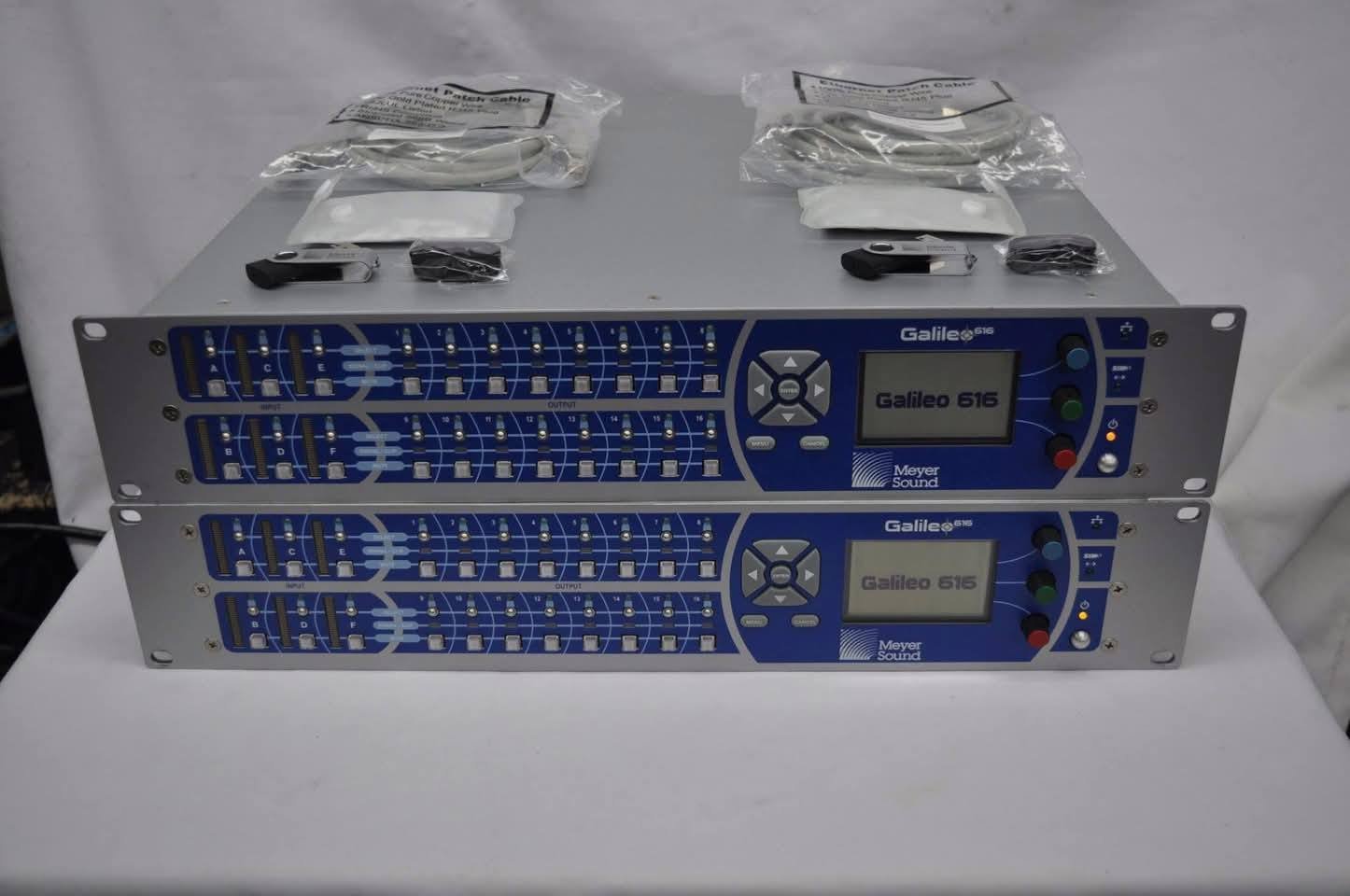
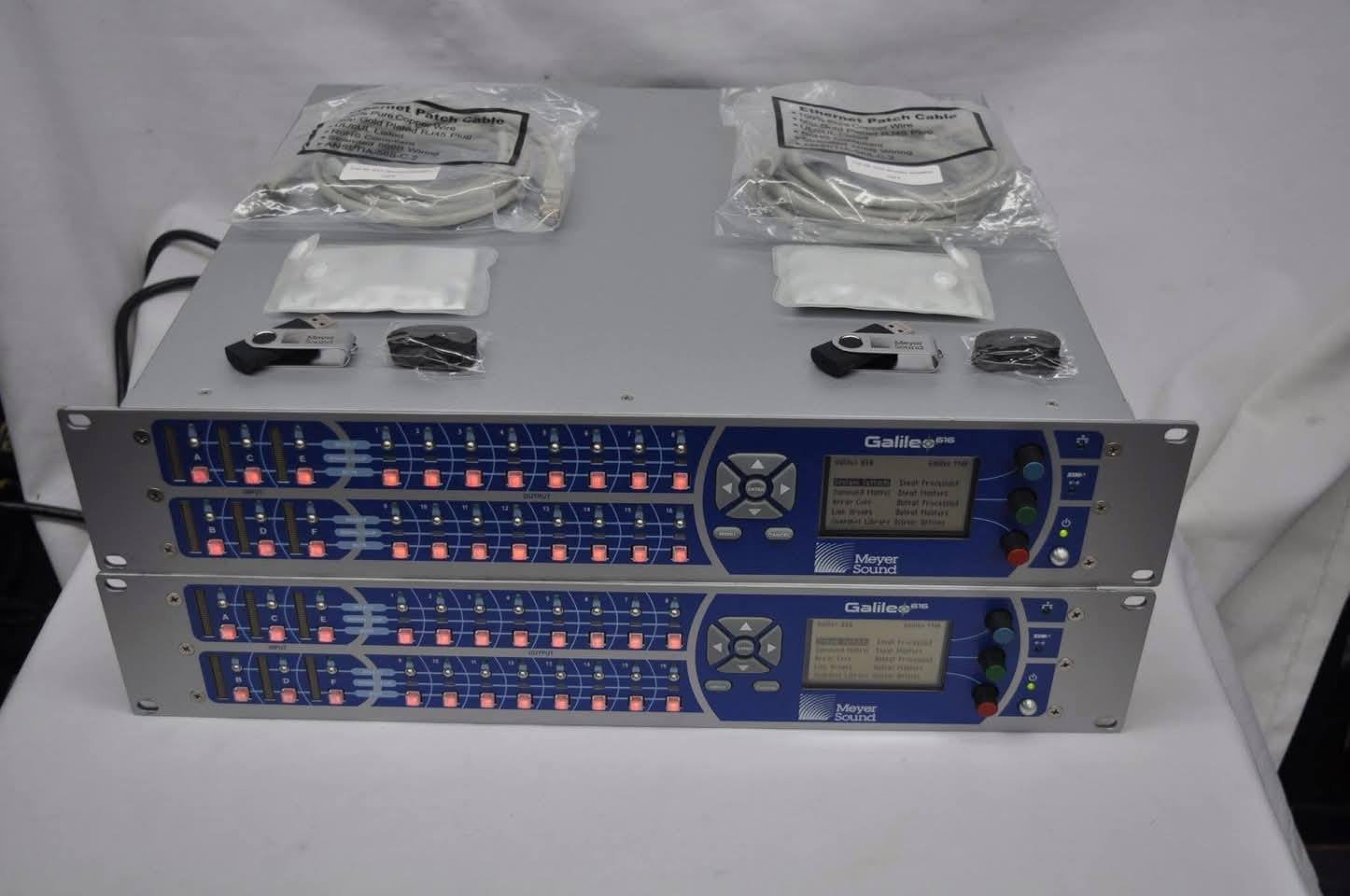
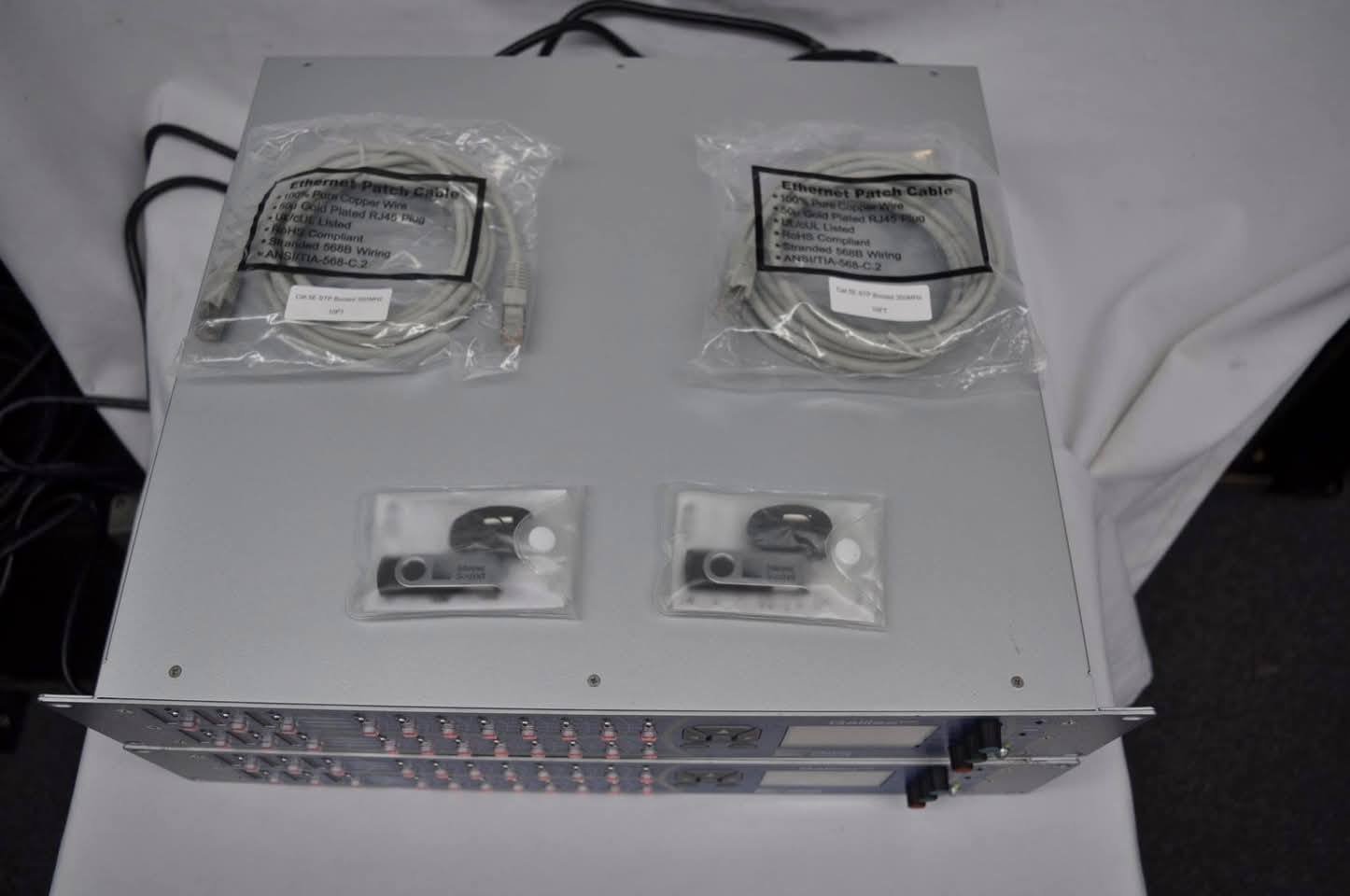
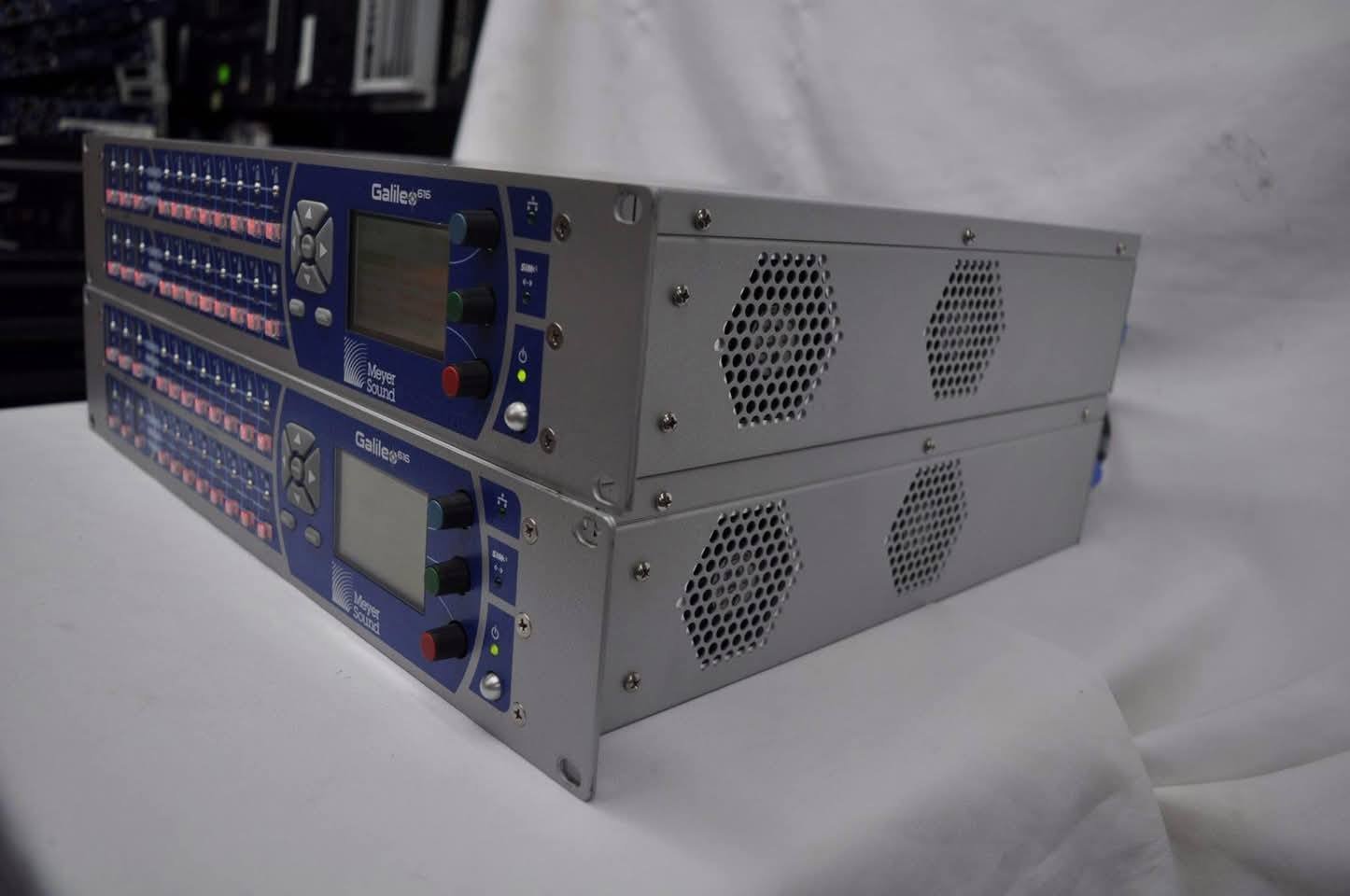
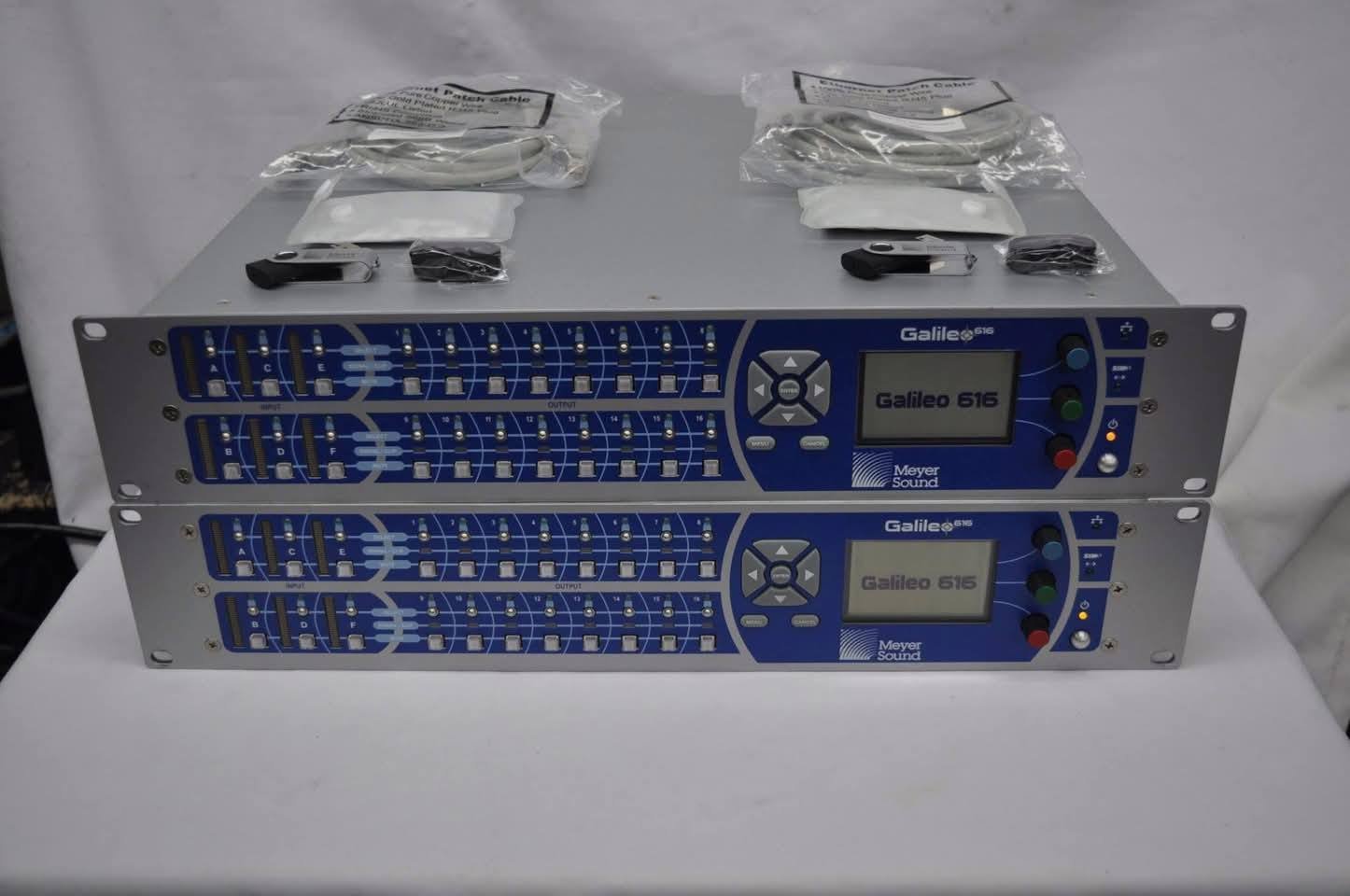
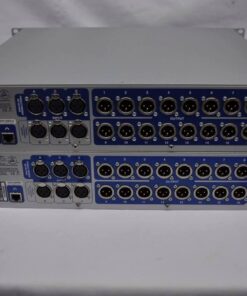

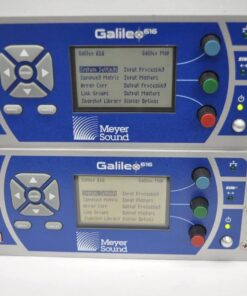

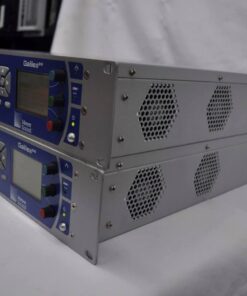
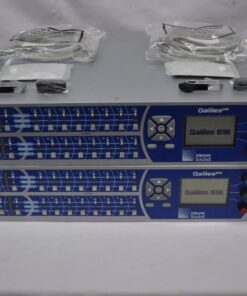
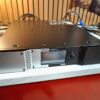
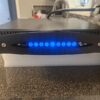
Buy Meyer Sound Galileo 616 – 6-Input, 16-Output Digital Loudspeaker Processor
The Meyer Sound Galileo 616 is a professional digital loudspeaker management processor designed for precise control of complex sound reinforcement systems. Featuring six configurable inputs, sixteen analogue outputs, a flexible 6 × 16 routing matrix, and advanced 96 kHz digital signal processing, it provides engineers with the tools needed to manage loudspeaker arrays, subwoofers, delays, and multiple audio zones from one central platform.
Developed for professional Meyer Sound systems, the Galileo 616 combines extensive equalisation, array correction, atmospheric compensation, and system alignment capabilities in a compact 2U rack-mounted enclosure.
Its integration with Meyer Sound Compass control software and SIM 3 measurement workflows makes it particularly relevant to touring engineers, system technicians, AV integrators, and venue operators working with established Meyer Sound installations.
For professional audio companies looking to purchase a Meyer Sound Galileo 616 in Europe, this processor offers a practical solution for maintaining existing systems, replacing compatible processors, or expanding sophisticated loudspeaker management configurations.
Six Inputs, Sixteen Outputs: Flexible Control of Complex PA Systems
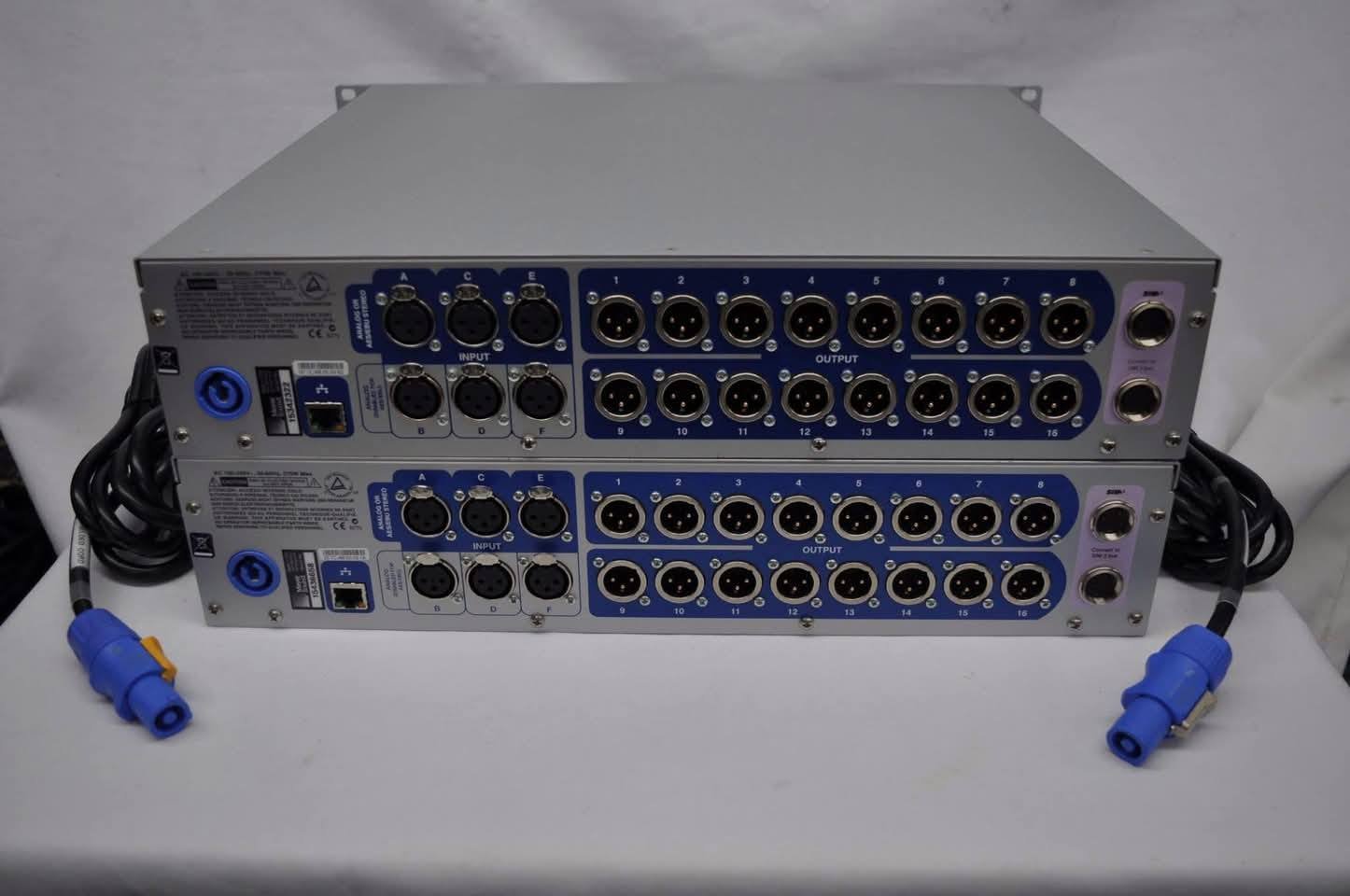
The Galileo 616 is built around a comprehensive 6-input, 16-output audio architecture.
Its six input channels can accommodate analogue signals, AES/EBU digital audio, or a combination of both, depending on the selected input configuration.
Sixteen balanced analogue XLR outputs provide independent signal distribution to different loudspeaker groups.
The full-summing 6 × 16 routing matrix allows any input to be assigned to one or multiple outputs.
This flexibility is especially valuable when a professional sound system includes several distinct loudspeaker sections.
For example, the Galileo 616 can be configured to manage:
- Left and right main PA systems
- Subwoofer groups
- Front-fill loudspeakers
- Out-fill systems
- Delay loudspeakers
- Balcony reinforcement
- Additional coverage zones
Each output can receive its own processing, allowing engineers to tailor the signal to the loudspeakers and acoustic requirements of a particular location.
Rather than relying on multiple separate processors, the Galileo 616 centralises loudspeaker management within one device.
Meyer Sound Galileo 616 Technical Specifications
| Specification | Details |
|---|---|
| Manufacturer | Meyer Sound |
| Model | Galileo 616 |
| Equipment type | Digital loudspeaker management processor |
| Input channels | 6 |
| Input formats | Analogue and AES/EBU digital |
| Input configuration | Pair-selectable |
| Output channels | 16 |
| Output connections | Balanced analogue XLR |
| Routing matrix | 6 × 16 full-summing |
| A/D and D/A conversion | 24-bit, 96 kHz |
| Internal processing | 96 kHz, 32-bit floating-point |
| DSP architecture | 1 GHz vector DSP |
| Maximum output level | +26 dBu |
| Processing latency | Approximately 1.5 ms |
| Delay capability | Up to approximately 2 seconds |
| Input equalisation | 31-band graphic EQ and 5-band parametric EQ |
| Output equalisation | 10-band parametric EQ |
| Additional processing | TruShaping, array correction, atmospheric compensation |
| Network control | Ethernet |
| Control software | Meyer Sound Compass |
| Measurement integration | Meyer Sound SIM 3 |
| Rack height | 2U |
| Approximate height | 88 mm |
| Weight | Approximately 8.7 kg |
Specifications are based on the supplied product information. Exact capabilities, firmware requirements, and supported software versions should be confirmed for the individual processor.
High-Resolution 96 kHz Digital Signal Processing
The Galileo 616 uses a high-resolution DSP architecture designed to maintain signal integrity while providing extensive loudspeaker processing.
Audio conversion operates at 24-bit resolution and a 96 kHz sampling rate.
Internally, the processor performs calculations using 32-bit floating-point processing at 96 kHz.
This architecture allows the processor to perform multiple signal-management operations while maintaining the numerical precision required for professional audio applications.
1 GHz Vector DSP
The Galileo 616 incorporates a dedicated 1 GHz vector DSP optimised for real-time audio processing.
This processing platform handles the device’s routing, equalisation, filtering, delay, and other loudspeaker management functions.
Fixed Processing Latency
The supplied specifications identify approximately 1.5 ms of fixed processing latency.
Consistent latency across the outputs is valuable in multi-loudspeaker systems because it helps maintain predictable timing relationships.
Digital Audio Input Handling
AES/EBU digital input signals are processed within the Galileo’s 96 kHz internal architecture.
Professional Signal Integrity
The combination of high-resolution conversion, floating-point processing, and dedicated DSP makes the Galileo 616 suitable for demanding professional sound reinforcement environments.
Precision Input Processing
Each Galileo 616 input channel provides a collection of processing tools designed to prepare and shape audio signals before they are distributed to the outputs.
This is useful when engineers need to make adjustments that affect multiple loudspeaker groups simultaneously.
Input Gain Control
Input gain allows engineers to manage signal levels entering the processing matrix.
Delay Adjustment
Input delay can be used to establish timing relationships between different audio sources or signal paths.
31-Band Graphic Equaliser
The integrated graphic EQ provides detailed frequency adjustment across the audible spectrum.
It can be useful for broad system tonal shaping and acoustic correction.
Five-Band Parametric Equaliser
Parametric filters allow engineers to target specific frequency ranges with adjustable filter characteristics.
TruShaping Equalisation
Meyer Sound’s TruShaping processing provides additional tonal shaping options using low-order filter designs.
Atmospheric Compensation
The Galileo 616 includes filtering intended to help compensate for the frequency-dependent effects of atmospheric conditions.
This is particularly relevant to large sound systems where sound travels substantial distances.
Independent Processing Across Sixteen Outputs
The sixteen output channels are one of the Galileo 616’s strongest features.
Each output can be configured independently, allowing the processor to manage multiple loudspeaker groups with different requirements.
Output Gain
Independent level adjustment helps balance loudspeaker groups throughout the venue.
Output Delay
Delay processing supports timing alignment between main loudspeakers, subwoofers, and supplementary coverage systems.
Polarity Control
Output polarity can be adjusted where required by the system configuration.
Ten-Band Parametric EQ
Each output provides extensive frequency adjustment for loudspeaker-specific tuning.
TruShaping Filters
Additional equalisation options support the desired tonal response.
High-Pass and Low-Pass Filtering
These filters are particularly important when managing loudspeakers and subwoofers operating across different frequency ranges.
Array Correction
The Galileo 616 includes correction tools developed for compatible Meyer Sound array systems.
This enables engineers to apply processing appropriate to the loudspeaker configuration.
Array Correction for Meyer Sound Loudspeakers
Large loudspeaker arrays require careful processing to achieve consistent performance across the intended audience area.
Different array lengths, coverage angles, and operating conditions can affect the acoustic response of a system.
The Galileo 616 includes array correction capabilities designed for supported Meyer Sound loudspeaker configurations.
These tools are especially relevant to established Meyer Sound M Series systems and other compatible loudspeaker platforms.
Why Array Correction Matters
Array correction helps engineers manage the acoustic characteristics of a loudspeaker system as a complete arrangement rather than treating each cabinet independently.
Depending on the system configuration, processing may be used to support:
- Consistent tonal balance
- Appropriate low-frequency behaviour
- Controlled high-frequency response
- System-wide alignment
- More predictable acoustic performance
The exact available correction settings depend on the loudspeaker models and processor configuration.
For buyers maintaining existing Meyer Sound systems, compatibility with the required array correction workflow should be confirmed before purchase.
Atmospheric Compensation for Large Venues
Sound travelling through air is affected by atmospheric conditions.
Temperature, humidity, frequency, and propagation distance influence the amount of high-frequency attenuation that occurs between a loudspeaker and the audience.
These effects become particularly relevant in large venues and outdoor productions.
The Galileo 616 provides atmospheric compensation filters that allow engineers to account for these conditions during system tuning.
Outdoor Concerts
Long sound propagation distances can make atmospheric effects more significant.
Arena Systems
Large audience areas may require careful high-frequency management.
Festival Productions
Environmental conditions can change during an event, affecting the system’s acoustic behaviour.
Large Permanent Installations
Atmospheric compensation can be incorporated into the overall loudspeaker tuning strategy.
These tools support professional system optimisation but do not replace acoustic measurement or appropriate loudspeaker system design.
Meyer Sound TruShaping Equalisation
TruShaping is one of the distinctive processing features associated with the Galileo platform.
It provides tonal adjustment through low-order equalisation filters designed for controlled frequency-response shaping.
Unlike simply applying numerous narrow filters, TruShaping offers another approach to modifying the system’s tonal characteristics.
For professional sound engineers, this can be useful when making broad tonal adjustments while considering the phase behaviour of the applied filters.
The Galileo 616 combines TruShaping with conventional parametric and graphic equalisation, giving engineers several processing options within the same platform.
Compass Software: Centralised Loudspeaker Management
The Galileo 616 supports network control using Meyer Sound Compass software.
Through an Ethernet connection, engineers can access the processor’s configuration and manage supported parameters from a compatible computer.
This is particularly valuable when the processor is installed in an amplifier rack or equipment room away from the mixing position.
Remote Parameter Adjustment
Compass allows engineers to access supported processing settings without relying exclusively on the front-panel controls.
Routing Management
The input-to-output matrix can be configured through the software interface.
Equalisation and Delay
Engineers can manage the processing required for individual inputs and outputs.
System Monitoring
Bidirectional communication helps maintain consistency between the processor’s operating state and the control interface.
Configuration Management
The software provides a central environment for managing Galileo processing configurations.
Software compatibility should be verified before purchase, particularly when integrating an older Galileo 616 with a current computer operating system.
SIM 3 Integration for Professional System Measurement
The Galileo 616 supports integration with Meyer Sound’s SIM 3 audio measurement system.
SIM 3 is used by professional sound engineers for detailed acoustic and electronic system analysis.
The Galileo’s SIM-bus connectivity supports measurement workflows without requiring extensive manual repatching of the audio system.
Measurement Access
The integration provides access to relevant signals for system analysis.
Reduced Repatching
Engineers can perform supported measurements without repeatedly changing physical audio connections.
System Alignment
Measurement data can support decisions about equalisation, delay, and loudspeaker positioning.
Professional Commissioning
SIM 3 integration is particularly useful during the setup and commissioning of complex Meyer Sound installations.
For engineers already using SIM 3, the Galileo 616 can fit naturally into an established measurement and tuning workflow.
Front-Panel Operation Without a Computer
Although Compass provides extensive remote management capabilities, the Galileo 616 also includes direct front-panel controls.
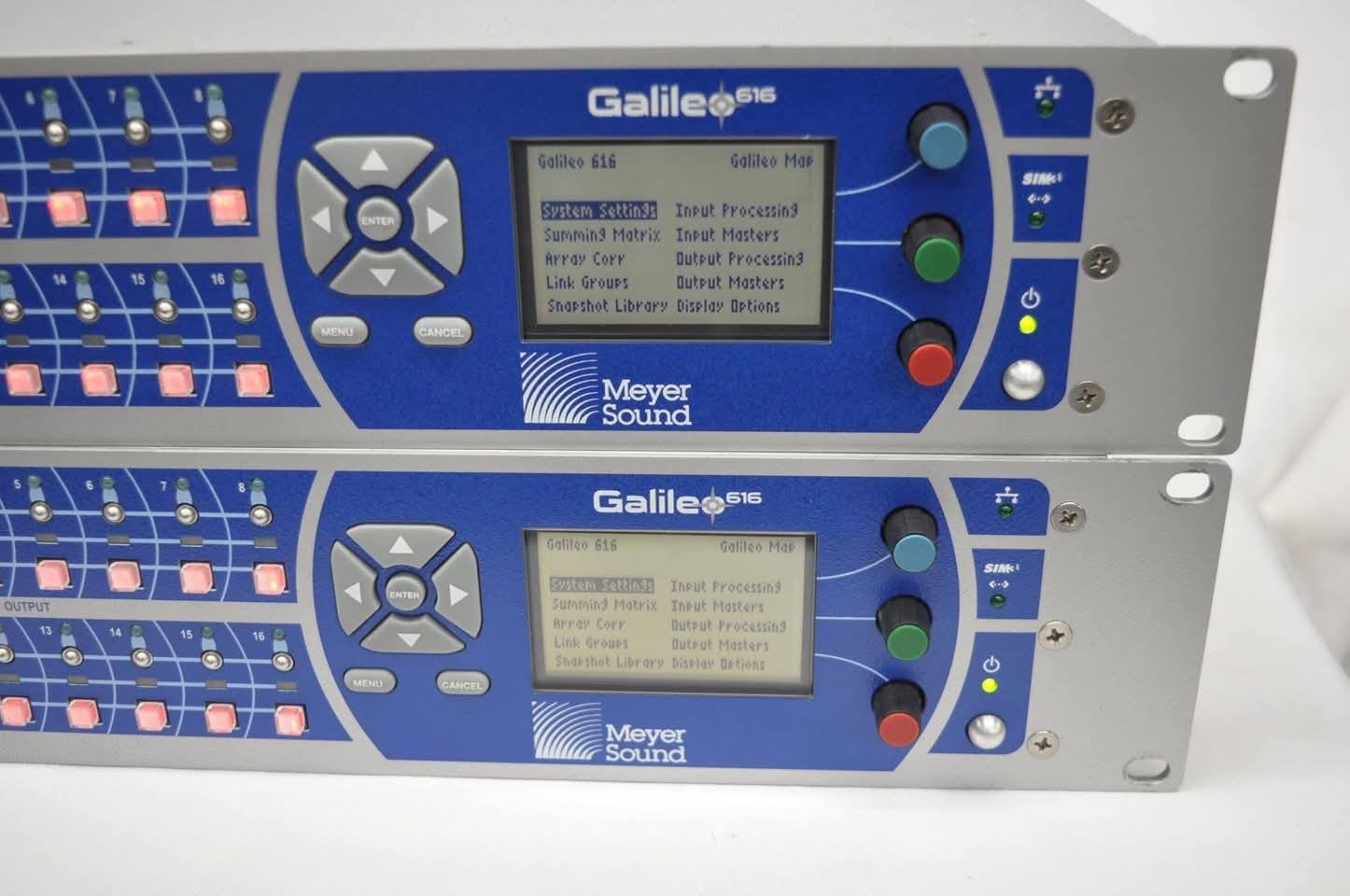
The interface features a backlit LCD display, rotary encoders, and illuminated input/output selection and mute buttons.
Backlit LCD
The display provides access to processing parameters and system information.
Rotary Controls
Encoder knobs allow engineers to navigate settings and adjust parameters.
Input and Output Selection
Dedicated controls provide access to individual channels.
Mute Functions
Illuminated mute buttons support channel management during setup and operation.
Standalone Configuration
The front panel allows essential processor functions to be accessed without a separate control computer.
This is useful during troubleshooting, smaller deployments, or situations where network control is unavailable.
Where the Galileo 616 Fits into a Professional Sound System
The Galileo 616 is a loudspeaker management processor rather than a power amplifier.
It processes and distributes audio signals to the appropriate downstream equipment.
In a typical professional sound system, the signal path may include:
Mixing console → Galileo 616 → Compatible amplifiers or self-powered loudspeakers
The Galileo manages the signal processing and distribution required by the system.
Main PA Processing
The processor can manage signals for left and right main loudspeaker systems.
Subwoofer Management
Dedicated outputs allow subwoofer groups to receive appropriate filtering, level control, and delay.
Front-Fill and Out-Fill Systems
Additional outputs can support supplementary audience coverage.
Delay Loudspeakers
Independent output delays help align loudspeakers positioned at different distances.
Multi-Zone Installations
The routing matrix allows audio signals to be distributed to multiple areas.
Complex Meyer Sound Systems
The processor can support systems requiring array correction, atmospheric compensation, and measurement integration.
Professional Applications
The Galileo 616 is particularly useful where a sound system requires more than basic stereo processing.
Concert touring: Manage main arrays, subwoofers, fills, and delay loudspeakers from a central processing platform.
Theatres: Support multiple loudspeaker positions with independent routing, EQ, and delay.
Corporate AV: Distribute audio to different loudspeaker zones while maintaining control over levels and processing.
Houses of worship: Manage complex coverage requirements across main seating areas, balconies, and supplementary zones.
Cinema and entertainment venues: Provide flexible routing and processing for suitable professional audio installations.
Permanent Meyer Sound installations: Maintain existing Galileo-based loudspeaker management systems and associated control workflows.
Galileo 616 vs Basic Loudspeaker Processors
| Feature | Meyer Sound Galileo 616 | Basic loudspeaker processor |
|---|---|---|
| Inputs | 6 | Model-dependent |
| Outputs | 16 | Often fewer |
| Routing | Full 6 × 16 matrix | Varies |
| Internal processing | 96 kHz, 32-bit floating-point | Model-dependent |
| Input graphic EQ | 31-band | Varies |
| Input parametric EQ | 5-band | Varies |
| Output parametric EQ | 10-band | Varies |
| Array correction | Meyer Sound-specific tools | Not necessarily available |
| Atmospheric compensation | Integrated | Model-dependent |
| TruShaping | Integrated | Not generally available |
| Network control | Compass software | Varies |
| SIM 3 integration | Supported | Not generally available |
| Rack size | 2U | Model-dependent |
The Galileo 616 is particularly relevant to professional systems requiring extensive routing and established Meyer Sound processing workflows.
What to Check Before Buying a Used Meyer Sound Galileo 616
The Galileo 616 is an established professional processor, making condition, firmware, and software compatibility important purchasing considerations.
Input and Output Testing
Confirm that all six inputs and sixteen outputs operate correctly.
Analogue and Digital Inputs
Verify the functionality of the required analogue and AES/EBU input configurations.
XLR Connectors
Inspect the connectors for damage, looseness, or intermittent operation.
Ethernet Control
Confirm that the processor communicates correctly with compatible Compass software.
Firmware Version
Check the installed firmware and determine whether it supports the required system configuration.
Compass Compatibility
Verify that a suitable software version can operate on the intended control computer.
SIM 3 Requirements
If SIM 3 integration is essential, confirm the required connections and compatibility.
Front-Panel Controls
Test the LCD, rotary encoders, selection buttons, and mute functions.
Processing Functions
Check that routing, EQ, delay, and other required processing features operate as expected.
Cooling and Power
Inspect the unit for abnormal operating noise, overheating, or electrical faults.
Service History
Ask whether the processor has undergone previous repairs or component replacement.
Included Accessories
Confirm whether power cables, rack accessories, or other equipment are included.
Price and Availability
The supplied information does not specify the current selling price, condition, or available quantity.
Contact Electronic Space to confirm these details.
Frequently Asked Questions
What is the Meyer Sound Galileo 616?
The Galileo 616 is a professional digital loudspeaker management processor featuring six inputs, sixteen outputs, and advanced DSP.
How many inputs does the Galileo 616 have?
Six inputs, configurable for analogue and AES/EBU digital audio.
How many outputs does it provide?
Sixteen balanced analogue XLR outputs.
Does the Galileo 616 have a routing matrix?
Yes. It features a full-summing 6 × 16 input-to-output routing matrix.
What sampling rate does the Galileo 616 use?
96 kHz.
What is the internal processing resolution?
32-bit floating-point processing.
Does it include graphic EQ?
Yes. Its input processing includes 31-band graphic equalisation.
Does the Galileo 616 support parametric EQ?
Yes. The supplied specifications identify five-band parametric EQ on inputs and ten-band parametric EQ on outputs.
Can it control subwoofers?
Yes. Its output filtering, routing, gain, and delay functions support subwoofer management.
What is TruShaping?
TruShaping is Meyer Sound’s equalisation technology that provides additional tonal shaping options using low-order filters.
Does the Galileo 616 support array correction?
Yes. It includes correction tools for compatible Meyer Sound loudspeaker arrays.
Can it compensate for atmospheric conditions?
Yes. Atmospheric compensation filters are included.
Does the Galileo 616 work with Compass software?
Yes. It supports compatible versions of Meyer Sound Compass software over Ethernet.
Can it integrate with SIM 3?
Yes. It supports Meyer Sound SIM 3 measurement workflows through the appropriate interface.
Can the Galileo 616 be operated without a computer?
Yes. Its front panel provides direct access to supported controls and settings.
Is the Galileo 616 a power amplifier?
No. It is a digital signal processor and loudspeaker management device.
Can it be used with self-powered Meyer Sound loudspeakers?
Yes. It can provide signal processing and distribution for suitable self-powered loudspeaker systems.
What rack space does it require?
2U.
How much does the Galileo 616 weigh?
Approximately 8.7 kg.
Is the Galileo 616 suitable for touring?
Yes. It is designed for professional loudspeaker management applications, including touring systems.
Can it be used in permanent installations?
Yes. It is suitable for appropriately designed fixed sound reinforcement systems.
How much does a Meyer Sound Galileo 616 cost?
Pricing depends on equipment condition, configuration, and availability. Contact Electronic Space for current information.
Meyer Sound Galileo 616 for sale in europe
The Meyer Sound Galileo 616 provides comprehensive loudspeaker management through its six-input, sixteen-output architecture, high-resolution DSP, full matrix routing, and extensive processing capabilities.
Its combination of parametric and graphic equalisation, array correction, atmospheric compensation, TruShaping filters, Compass network control, and SIM 3 integration makes it particularly valuable for established professional Meyer Sound systems.
For touring companies, AV integrators, theatres, concert venues, and installation specialists, the Galileo 616 offers a flexible platform for managing complex loudspeaker configurations from one central processor.
Electronic Space welcomes enquiries from professional audio buyers throughout Germany, France, the Netherlands, Belgium, Austria, Italy, Spain, and other European markets.
Contact Electronic Space to request Meyer Sound Galileo 616 pricing, confirm processor condition and firmware compatibility, and discuss available delivery arrangements.
Be the first to review “Meyer Sound Galileo 616 Processors”
Related products
Mc2 Audio Amplifiers
Used Sound Equipment
Power Amps
Power Amps
Power Amps
Funktion One
Power Amps
Reviews
There are no reviews yet.